


You are surrounded by people all day and you still feel like you are carrying it alone. That is the strange thing about loneliness at the top. It does not go away because your calendar is full, and you can end a day packed with meetings and decisions still feeling that nobody was really in it with you.
It is worth being precise about why, because the usual advice, find a peer group, get a mentor, reconnect with friends, is not wrong but treats the loneliness as a shortage of people. For most senior leaders that is not quite the problem. The problem is where your attention has been trained to live.
Your Job is to Find What is Wrong, and That Has a Cost
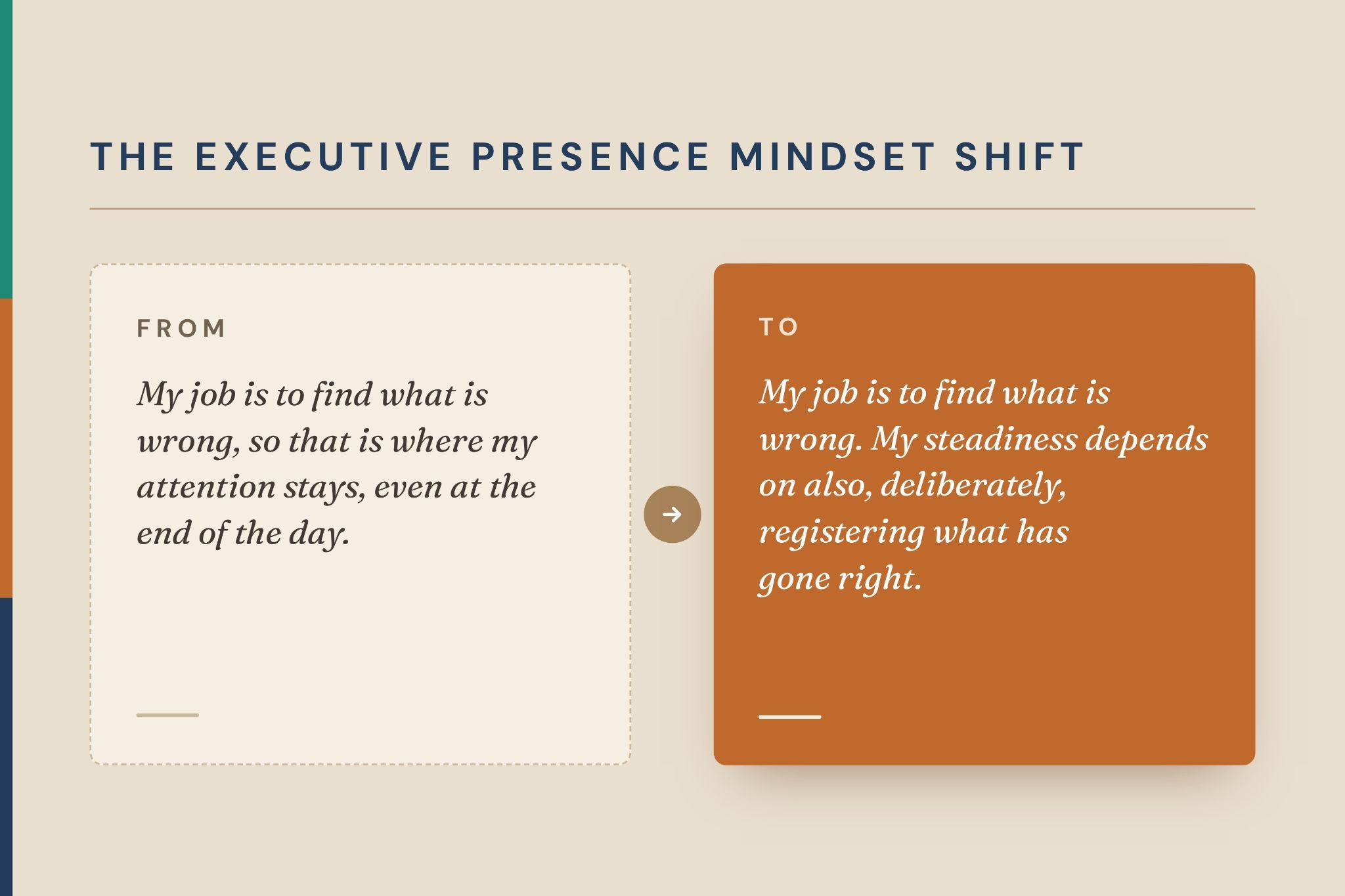
Think about what you are paid to do all day. Spot the risk. Catch the gap. Find the flaw in the plan before it becomes a failure. You have spent years becoming excellent at scanning for what is still broken and it has made you good at your job. Attention is a habit, though, and a mind kept permanently on what is wrong begins to believe that everything is wrong, including your own situation. That is not a character flaw. It is an occupational one, and the skill that makes you effective is the same one making things feel heavy.
You are not lonely because things are bad. You are lonely because your attention is trained on what is missing, and never on what is already here.
What follows is that when everything feels heavy you stop registering what is actually working. The decision that went right, the problem that resolved without anybody noticing, the progress that did happen. All of it is still there and you are simply no longer looking at it, because your attention is fixed on the next broken thing. A day made only of problems, however busy, feels like a day spent alone with a weight.
What Gratitude Actually Does Here
This is where re-living what went well stops being a nicety and becomes the specific correction. Not forced positivity, and not pretending the problems are imaginary. Deliberately bringing back the things that genuinely went right and letting yourself feel grateful for them, because your trained attention will not do it on its own. It has to be on purpose. Ground the end of a hard day in even one real thing that worked and the weight redistributes, because the day stops being a list of what is still broken and becomes a more honest picture. Research links this kind of deliberate gratitude practice to lower reported stress and a greater sense that circumstances are manageable rather than overwhelming (Emmons and McCullough, 2003).
There is a related move worth knowing about, which is what to do with the thought that arrives when things are genuinely hard, and that belongs to a different style of presence: how do I quiet the voice that says I’m not good enough to lead?