



You are about to walk into the room and the thought arrives: everyone here is more qualified than me. Or the sharper one, that sooner or later they are going to realise you do not actually know what you are doing. It is fast and it is convincing, and the more senior you become the louder it gets, because the rooms get bigger and the stakes get higher.
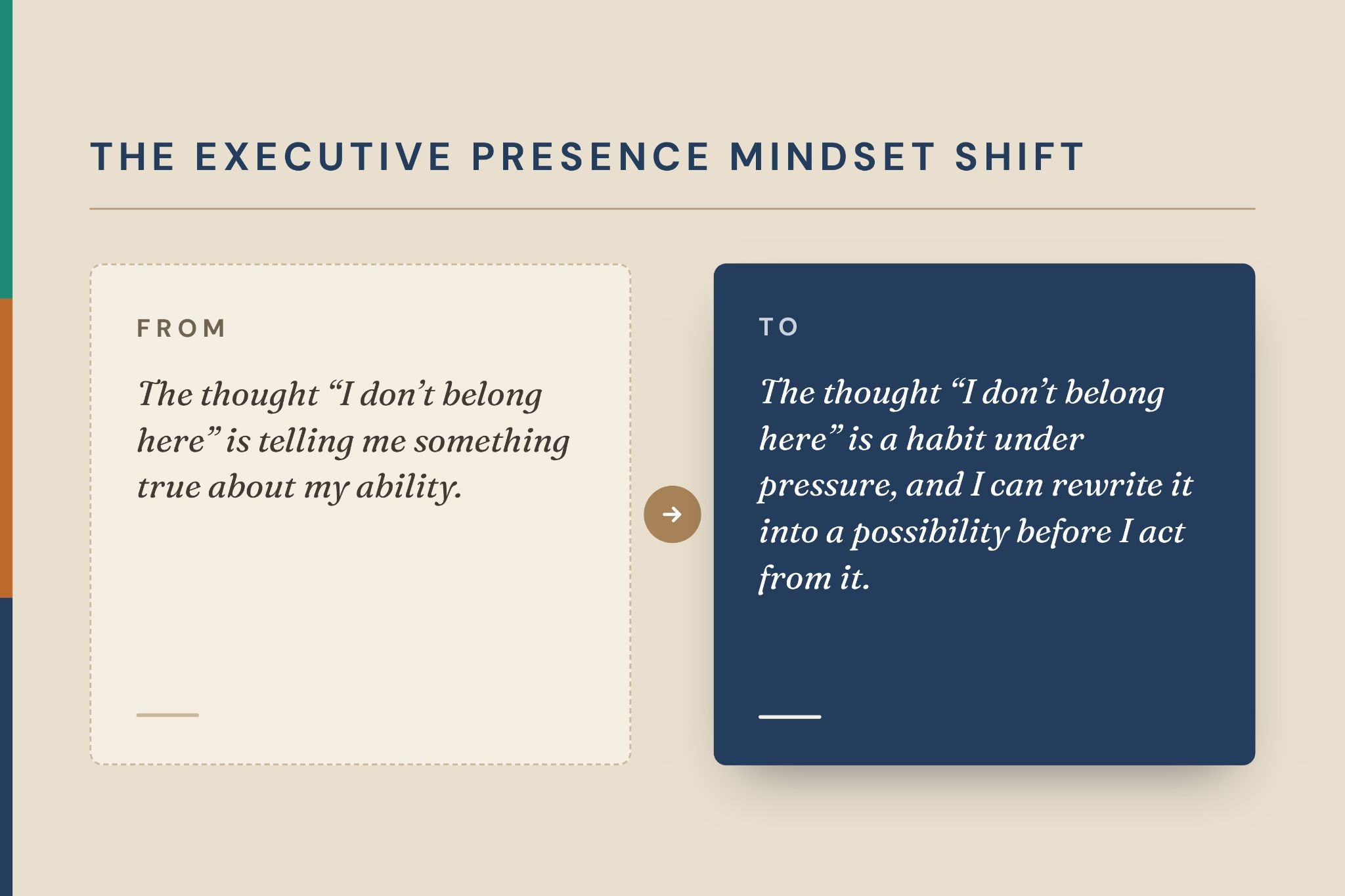
The thought is not information, though. It is a habit, and it turns up most reliably in people whose track record plainly contradicts it, which is the first clue that it is not an accurate reading of ability. It is a pattern of thinking that high achievers are particularly prone to, and a pattern can be interrupted.
The Problem Is Not the Thought. It Is That You Believe It
Everybody has a limiting thought arrive under pressure. What separates leaders who are steadied by their own minds from leaders who are run by them is not whether the thought shows up. It is what happens in the two seconds afterwards. Most leaders take the thought as fact. “I don’t belong here” arrives, they believe it, and then they lead the meeting from inside that belief, over-preparing, hedging, staying silent when they should speak, or overcompensating to cover a gap that was never really there.
The imposter thought is not a verdict. It is the first draft your mind reaches for under pressure, and you are allowed to rewrite it.
The skill is not stopping the thought from arriving, which is not possible and only feeds it. The skill is catching it and deliberately turning it into a possibility. “I don’t know enough to be here” becomes “I know enough to have earned this seat, and I can learn the rest.” “They’ll find me out” becomes “I have handled things I did not know before, and I will again.” This is not positive thinking pasted over fear. It is refusing to let the most limiting version of the thought be the one you act from. Research on reappraisal under pressure found that deliberately reinterpreting the physical signs of stress as useful rather than dangerous improved performance in genuinely high-stakes conditions (Jamieson, Mendes, Blackstock and Schmader, 2010).
One Reframe Worth More Than the Rest
Of all the ways to turn the imposter thought, one does most of the work: stop scanning for the reasons you do not belong in the room and deliberately look for the reasons you do. The imposter voice is expert at building the case against you. Your job is to build the case for you, and there is always a case, the decision that got you here, the problem only you saw, the seat you were actually invited to.
Notice what that reframe leans on, though. Looking for why you belong is inward work, which is where this behaviour lives. It also depends on something outward, because a mind busy monitoring itself for signs of exposure has very little attention left for anybody else, and genuine curiosity about the people in front of you is one of the quickest routes out of self-monitoring. That is a different behaviour from a different style of presence, and it is no accident that the two support each other.