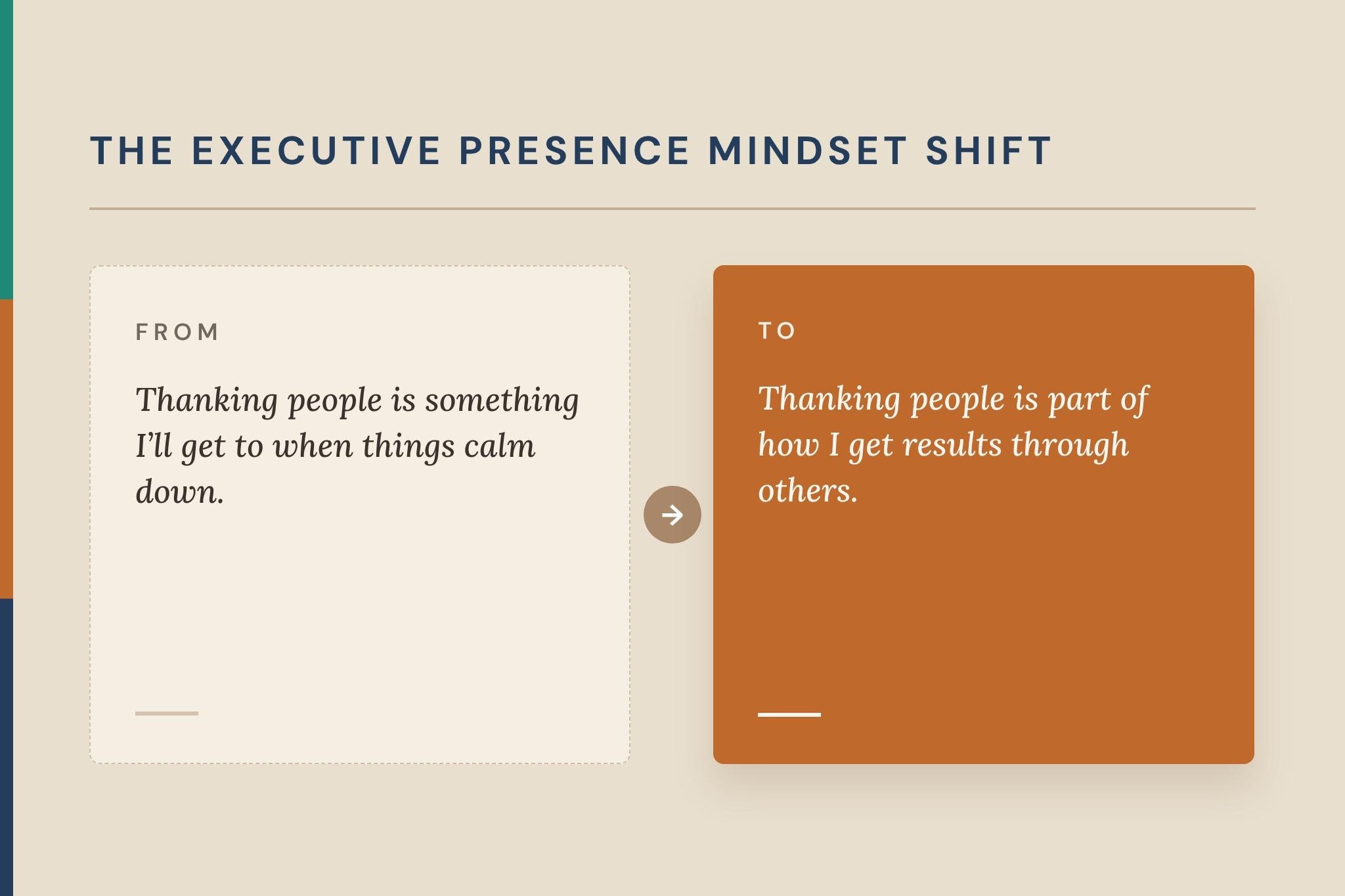

The quarter closed well. Targets were met, a difficult launch went smoothly, and the senior team is pleased. You are already thinking about next quarter. Somewhere in your team, the person who stayed late for a week to fix the problem that nearly derailed the launch is wondering whether anyone noticed.
Leaders focused on delivery often mean to say thank you. They feel grateful. They simply move on to the next priority first, or save it for a team email thanking everyone for their hard work. To the people who did the hardest part, that can feel like being thanked by nobody in particular, and some of them begin to hold a little back.
It is easy to treat appreciation as courtesy, pleasant but optional. The research suggests it does real work. In a series of experiments, people who were thanked for helping were far more willing to help again, and a manager’s expression of gratitude increased the effort of a team of fundraisers, largely because being thanked made people feel socially valued (Grant and Gino, 2010). Knowing how to show appreciation to employees matters more as your results depend on others, and it comes down to three habits.
Habit 1: Be Specific About What They Did and Why It Mattered
The difference between a thank-you that lands and one that doesn’t is usually specificity. “Thanks for all your hard work” is kind but forgettable. “Thank you for staying on the supplier problem last week. Without that fix, the launch would have slipped” tells someone exactly what they did and why it mattered.
Specific thanks also tells the person, and everyone who hears it, what kind of effort you value and want to see again. It does not need to be long. Two sentences that name the effort and its effect are usually enough. Specific thanks is also harder to fake, which is why people trust it more.
Habit 2: Say It Soon, and in the Way They Prefer
Appreciation given soon after the effort connects the two clearly. Saved for the year-end review, it loses most of its effect. A short thank you message to team members, sent the same day, often means more than a formal mention months later.
How you say it matters as well. Some people value public recognition. Others would much rather hear it privately. Across cultures, the right setting varies a great deal, so ask, or ask whether there are any other options they would prefer. With a team in other countries, appreciation that is not said deliberately is often not said at all. A short message or a minute at the start of a call can carry the same weight as a word in the corridor. The medium matters far less than the precision and the timing.
Habit 3: Carry Their Name Upward
One of the most valuable forms of appreciation is the one senior leaders hear. Telling your own boss, by name, who made a result possible costs you nothing and can matter a great deal to the person you mention. Then let that person know you did it. Many leaders worry that naming individuals will make others feel left out, especially in teams where everyone worked hard. In practice, the opposite tends to happen. When people see that contributions are noticed and passed on, they trust that theirs will be too.
Leaders who do this well understand that getting credit for your work and giving credit to others are not in competition. A leader who credits the team generously is rarely seen as having done less. More often, they are seen as someone who builds strong teams, which is exactly what senior roles require.
At Coach Vikram & Company, we would say that the leaders people work hardest for are rarely the ones who praise most. They are the ones whose thanks is precise enough to show they were paying attention. It is a recurring theme in executive presence coaching with leaders whose results now depend on teams they cannot oversee every day.