

The night before a major go-live, the client’s program manager sends a message asking, for the third time that day, whether the cutover plan is definitely on track. The delivery leader replies with a precise update on timings, dependencies, and rollback steps, all of it correct, and is puzzled when the next message arrives an hour later asking much the same thing.
The facts were never the problem, because the client had read the plan and understood it perfectly well. What they were looking for was reassurance that someone capable was holding the situation with them, and a reply made entirely of timelines, however accurate, did not give them that.
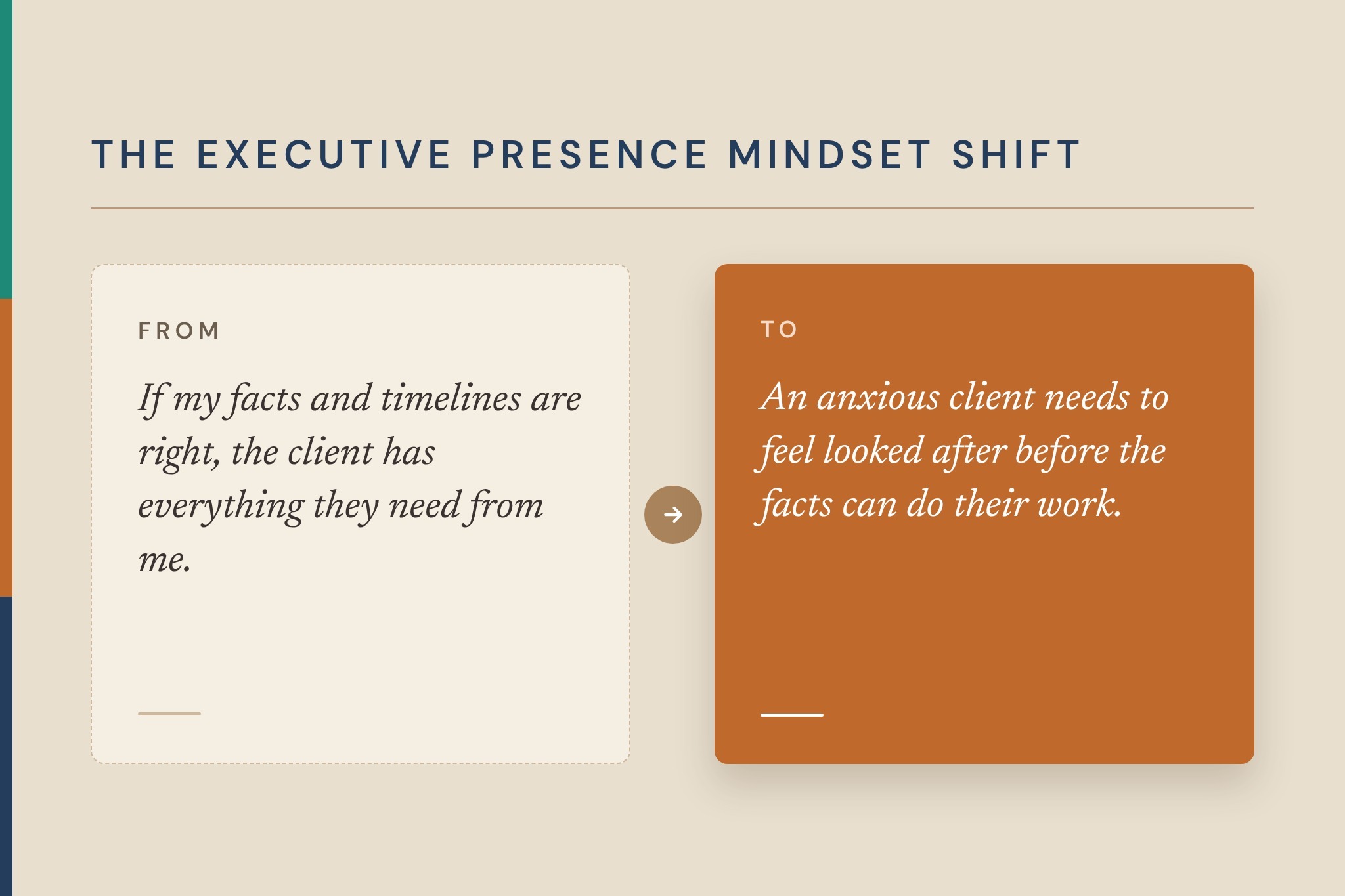
Learning how to go above and beyond for clients in these moments begins with recognizing that an anxious person needs to feel looked after before facts can settle them. Research from a medical setting makes the point vividly, since women who watched a doctor add a brief, compassionate acknowledgment to a standard consultation rated the doctor as warmer and more caring and reported less anxiety afterward (Fogarty, Curbow, Wingard, McDonnell and Somerfield, 1999).
Reason One: Facts Don’t Land Until the Client Feels Looked After
When a client is anxious, the first thing they need to hear is that you understand what this moment means for them, whether that is a launch their leadership is watching or a deadline they personally promised to meet. A sentence acknowledging that pressure, said before you share the plan, changes how the rest of your message is received, because it tells the client that you see them as a person carrying responsibility rather than simply as the approver at the end of a plan.
This is the simplest form of supporting a client under pressure, and it costs nothing but a moment of attention. Once the client feels that you see the weight they are carrying, the timelines and contingencies you share afterward begin to reassure them instead of simply informing them.
Reason Two: Going Above and Beyond Is Usually Small
Many delivery leaders hesitate to be kind to clients because they worry it will turn into free work or blurred boundaries, yet the gestures clients remember are rarely large. A short message the evening before cutover, a call to say the first hour went smoothly, or being reachable during the moment the client is most worried all count for far more than they cost. None of these gestures changes the scope, yet each of them tells the client that someone on the vendor side is thinking about them and not only about the work.
Kindness in client relationships works best when it is generous with attention and careful with scope, so that you look after the person without quietly giving away the work. If a client asks for something genuinely outside the plan, you can still respond warmly while asking whether there are any other options that would meet the need properly.
Reason Three: Clients Remember How the Hard Week Felt
Months after a difficult go-live, few clients will remember the exact timings of the cutover, yet almost all of them will remember who stayed calm, who checked in, and who made them feel they were not facing it alone. Those memories shape renewals and referrals far more than any single deliverable, because they tell the client what working with you is really like when it matters, and being remembered as the person who stayed steady is one of the most durable kinds of value a delivery leader can create.
That is why helping clients beyond the contract is not a soft extra but a practical part of delivery, because the relationship you build in the hardest moments is the one the client relies on next time. Your own team will be feeling the pressure of the go-live too, and the same care is worth extending to them, which comes far more easily when you already know how to genuinely connect with your team beyond work.
At Coach Vikram & Company, we would say that your delivery experience is your advantage in these moments, because you have seen enough go-lives to know which worries are justified and how to steady the ones that are not. Leaders who come to executive presence coaching often discover that clients describe them as reliable not only because the work was right, but because they felt looked after when it mattered most.