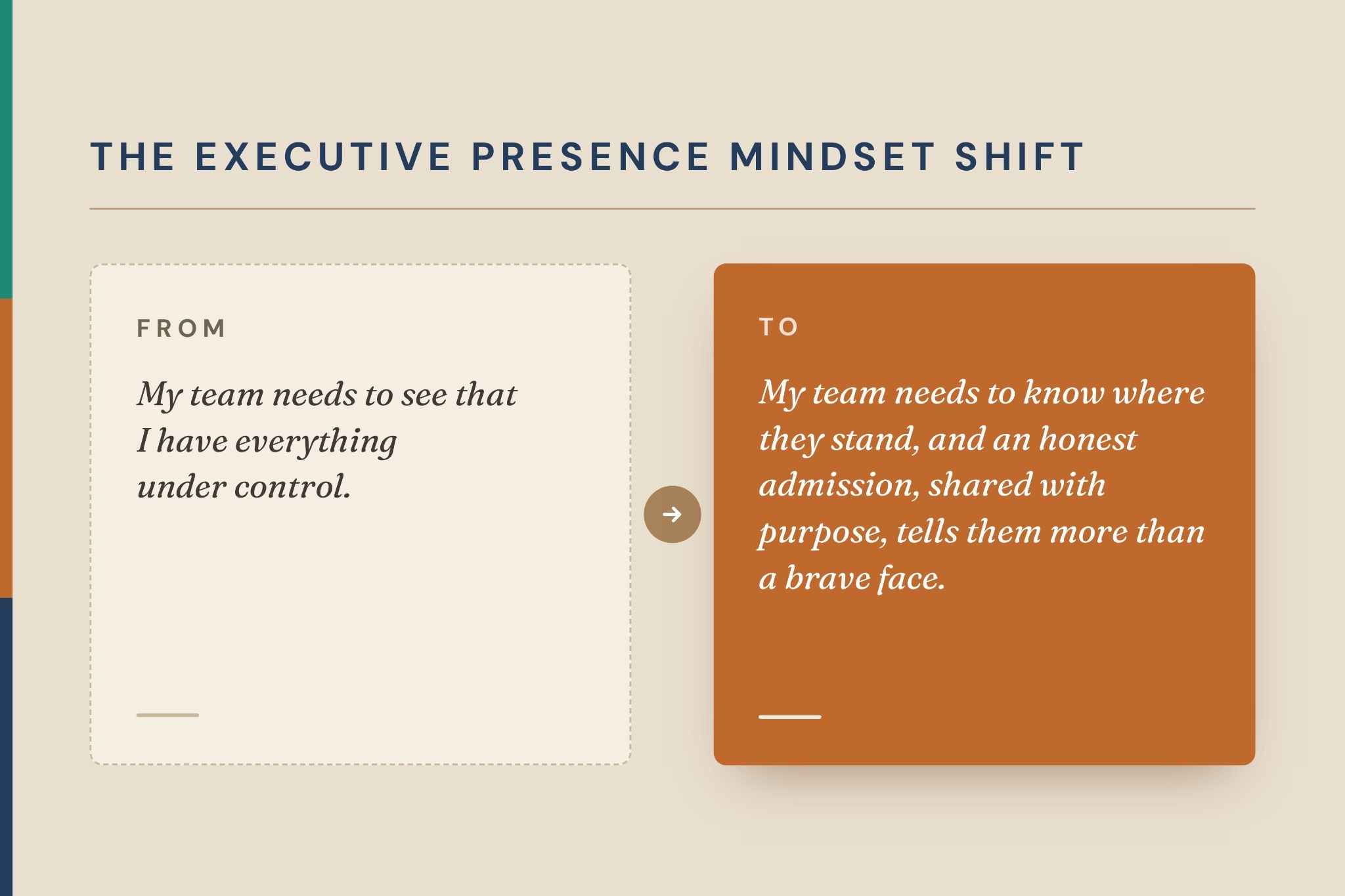



Halfway through a difficult quarter, a team lead stands up in the weekly meeting and says what she always says: everything is under control. Nobody believes her. They can see the missed targets and the late nights. What they can't see is what she's actually thinking, so they fill the gap with their own worst guesses.
Another leader, in the same situation, says something different. "This one's worrying me too. Here's what I'm doing about it, and here's where I could use your help." The room relaxes. Nothing about the numbers has changed. What changed is that people finally know where they stand.
What Sean Does in That Office
There's a scene in Good Will Hunting that shows vulnerability in leadership more clearly than most business books. Sean, the therapist, sits with Will after reading his file. Will has spent the whole film keeping everyone at arm's length. Sean tells him a little about his own difficult childhood. Then he says, quietly and over and over, "It's not your fault," until Will's defenses finally give way.
It's a therapy room, not a workplace, and leaders aren't therapists. But the move translates. Sean's disclosure isn't about Sean. He shares just enough of himself to make it safe for Will to stop pretending. That's the difference between vulnerable leadership and simply oversharing: the vulnerability is in service of the other person.
Why We Overestimate the Risk
Most leaders hold back because showing uncertainty feels dangerous. Surely the team needs someone who has it all figured out.
The evidence suggests we misjudge how this looks from the outside. Researchers have found that people tend to judge their own displays of vulnerability more harshly than others judge them, a pattern they called the beautiful mess effect (Bruk et al., 2018). What feels like weakness from the inside often reads as courage or honesty to everyone else.
That doesn't mean every admission lands well. Context matters, and so does proportion. A leader who unloads their anxieties in every meeting doesn't come across as brave. They come across as someone the team now has to look after.
It also helps to notice what you're actually protecting by staying guarded. Often it isn't the team. It's your own picture of yourself as unshakable.
Sharing With a Purpose
The useful question before sharing something personal is simple: is this for them or for me? Sharing personal stories at work works when the story helps someone else. It tells them they're not alone in finding something hard, or shows how you got through a similar problem. It works badly when it's mainly a way of relieving your own discomfort.
Pressure is a good example. Admitting that a deadline is weighing on you, and then saying what you're doing about it, gives your team permission to be honest about the same thing. It also makes it easier to talk openly about how to handle pressure at work when everyone is pretending they're fine.
If you're unsure how much to say, it's worth asking whether there are any other options than all or nothing. Often there is a middle ground: naming the feeling without the full backstory. "I've been through something like this before, and it was hard" can be enough.
Norms differ, too. In some workplaces and cultures, a leader talking about personal difficulty would feel out of place, and something smaller, like admitting that a decision was hard to make, sends the same signal. Learning how to be more authentic at work usually starts there, with small truths rather than big confessions.
Authentic leadership isn't about disclosure for its own sake. It's about closing the gap between what you show and what's actually true, enough that people can trust what they see.
A lot of executive presence coaching focuses on projecting confidence. Less attention goes to what happens when a leader lets others see that confidence and difficulty can sit side by side. At Coach Vikram & Company, we would say the most trusted leaders aren't the ones who never struggle, but the ones whose teams know they'll be told the truth when they do.