


A manager finishes a presentation that went well by any reasonable measure. The client asked good questions, the decision went her way, and her own boss sent a short note afterward saying it was strong. On the drive home, she replays the one moment she stumbled over a figure. By the time she gets home, that stumble is the whole presentation.
Most capable people know this loop. It's worth asking why it runs so reliably, and what it costs.
Two Portraits of the Same Person
There's a short film by Dove that makes the gap visible. A forensic sketch artist, unable to see the women he's drawing, sketches each one twice: once from her own description of herself, and once from the description of a stranger she met briefly. When the two sketches are hung side by side, the self-described portrait is consistently the harsher one.
It's an advertisement, not a study, and it was made to sell soap. But it captures something many people recognize. We're often far kinder and more accurate about others than we are about ourselves. That's worth knowing if you're wondering how to stop being so hard on yourself at work, because the harsh portrait usually isn't the true one. It's just the familiar one.
The same pattern shows up in how we judge work. Most of us find it fairly easy to see what a colleague does well. Recognizing people's strengths comes naturally when the person is someone else, and applying the same generosity to ourselves is much harder.
Why Harshness Doesn't Work
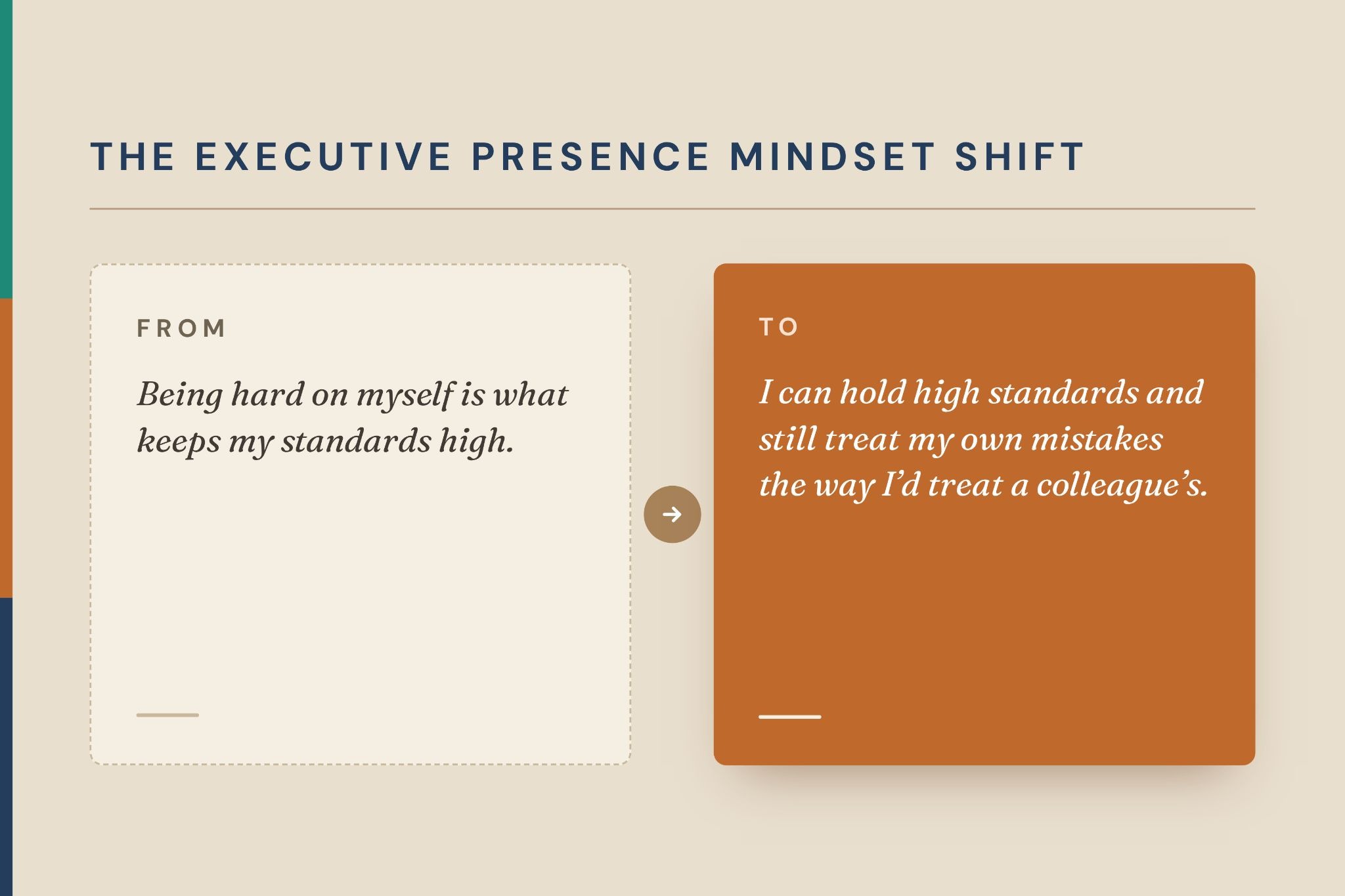
Many leaders quietly believe their self-criticism is what keeps them sharp. If they went easier on themselves, standards would slip.
The evidence points the other way. In a series of studies, people encouraged to treat a recent failure with self-compassion were more motivated to improve afterward than those who focused on boosting their self-esteem, and they spent longer studying for a retest (Breines & Chen, 2012).
That's the important distinction. Self-compassion for leaders isn't about lowering the bar. It's about how you respond when you miss it. Harshness makes mistakes feel dangerous, and things that feel dangerous tend to get hidden, avoided, or explained away. Treating a mistake as something that happens to capable people makes it easier to look at honestly and fix.
Self-compassion is sometimes mistaken for letting yourself off the hook. It isn't. You can take full responsibility for a mistake and still speak to yourself the way you would to a colleague who had made the same one.
High Standards Without the Punishment
There's a difference between high standards and perfectionism at work. High standards ask, "What would make this better next time?" Perfectionism asks, "Why wasn't it perfect this time?" One leads somewhere. The other mostly leads back to the drive home.
Dealing with mistakes at work without beating yourself up doesn't mean pretending they didn't happen. It means naming the error, deciding what you'll do differently, and then letting it go rather than replaying it all evening. When you're stuck in the replay, it can help to ask whether there are any other options for how to read the moment. The stumble over one figure is also the presentation where the client said yes.
Self-acceptance as a leader goes a step further. It means accepting that some things you're not especially good at may stay that way, and that this is normal. Most good leaders have obvious gaps. What sets them apart is knowing where those gaps are, and not spending their energy pretending otherwise.
This matters beyond your own wellbeing. Teams notice how a leader treats their own mistakes. A leader who is visibly harsh with themselves often makes it harder for others to admit errors, because the standard on display is that mistakes are shameful.
Much of executive presence coaching is concerned with how leaders come across to others. How they speak to themselves after a difficult day shapes that more than most people expect. At Coach Vikram & Company, we would say the most steady leaders aren't the ones who never get things wrong, but the ones who can look at a mistake without flinching from it, or from themselves.