

The launch went well. Better than well, in fact: on time, under budget, and the client called it the smoothest rollout they'd seen. That evening, the project lead sends the team a message. It's a tidy list of seven things that need fixing before the next phase.
Nobody replies. A few people read it twice, looking for the part where someone says thank you. It isn't there.
The Winner Who Only Saw Problems
There's a British comedy sketch that captures this with painful accuracy. A racing driver has just won a race, and a trackside interviewer asks him to describe how it went. All the driver can talk about is what went wrong. The car was not so good. There were many, many problems. The interviewer keeps trying: "But you did actually win?" The driver agrees, then goes straight back to the problems.
By the end, the interviewer is almost pleading. He just wants to know whether winning makes the man happy.
It's funny because most of us have worked for that driver, or been him. Results come in, and attention goes straight to the gaps. Gratitude never gets a turn.
Why Thanks Get Skipped
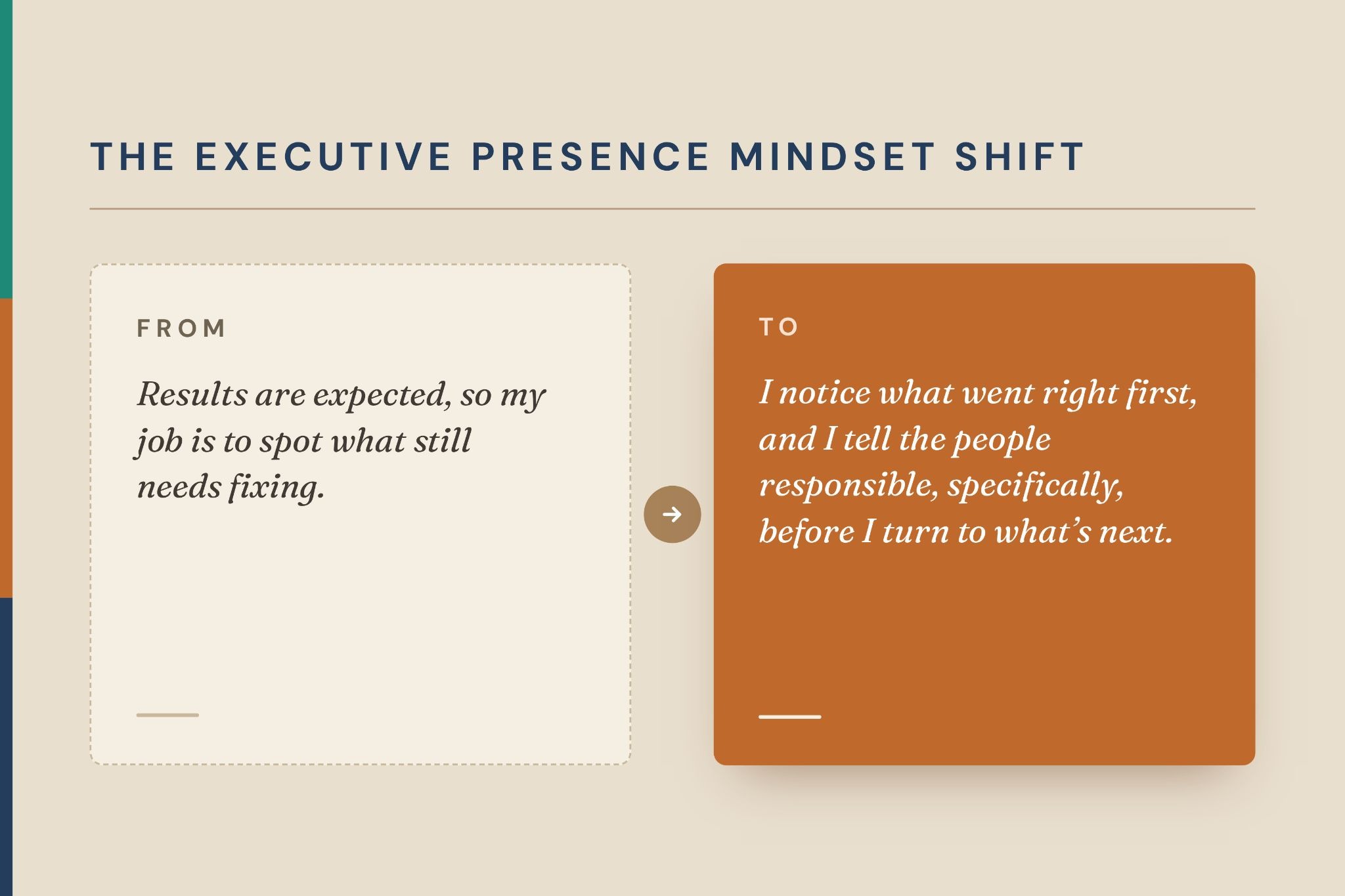
Most leaders who wonder how to show appreciation to employees don't lack goodwill. They lack the habit of noticing what went right before they turn to what went wrong. A good debrief asks what failed, what slowed things down, and whether there were any other options worth trying. Those are fair questions. They're just rarely preceded by a simple thank-you.
That matters more than it might seem. In a series of studies, people who were thanked for their help were noticeably more willing to help again, largely because being thanked made them feel their contribution was valued (Grant & Gino, 2010). Skipping thanks doesn't just feel cold. It quietly makes the next round of effort harder to come by.
There's also something personal in it. Leaders who are hard on themselves often find it hard to thank others, because the same inner voice that counts their own mistakes counts everyone else's too. Working on positive self-talk at work can make room for noticing what went well, in yourself and in other people.
What a Real Thank-You Sounds Like
"Thanks, everyone" is better than nothing, but not by much. It's general enough to apply to anyone, so it lands with no one in particular.
A thank-you that people remember names what someone did and how it helped. "Thank you for staying on that call with the supplier until they agreed to the new date. It's the reason we launched on time." It takes ten more seconds than "thanks, team." It also tells the person that their effort was seen, which is most of what they wanted.
Order matters too. If you're going to send a list of fixes, send the thanks first, and make it a separate message if you can. When gratitude and criticism arrive together, people tend to remember only the criticism.
It's worth thinking beyond the obvious names. The people who make a team's work possible are often the least visible: the colleague who keeps the shared files in order, the person who quietly covers when someone is out. Knowing how to say thank you to your team includes them.
Thanking norms vary, too. In some teams and cultures, being thanked in front of everyone is embarrassing, and a private word or a short note means more. In others, public thanks is the whole point. If you're not sure, ask, or simply notice how people react.
It's also possible to overdo it. Thanking everyone for everything, all the time, soon blurs into background noise. The aim isn't more thank-yous. It's thank-yous specific enough to mean something.
None of this takes much time. What it takes is the decision to look for what went right before you look for what went wrong.
Much of executive presence coaching focuses on what leaders project. Gratitude is one of the places where that is most visible, and most often missing. At Coach Vikram & Company, we would say that a thank-you is one of the clearest signals a leader can send about what they notice and value.