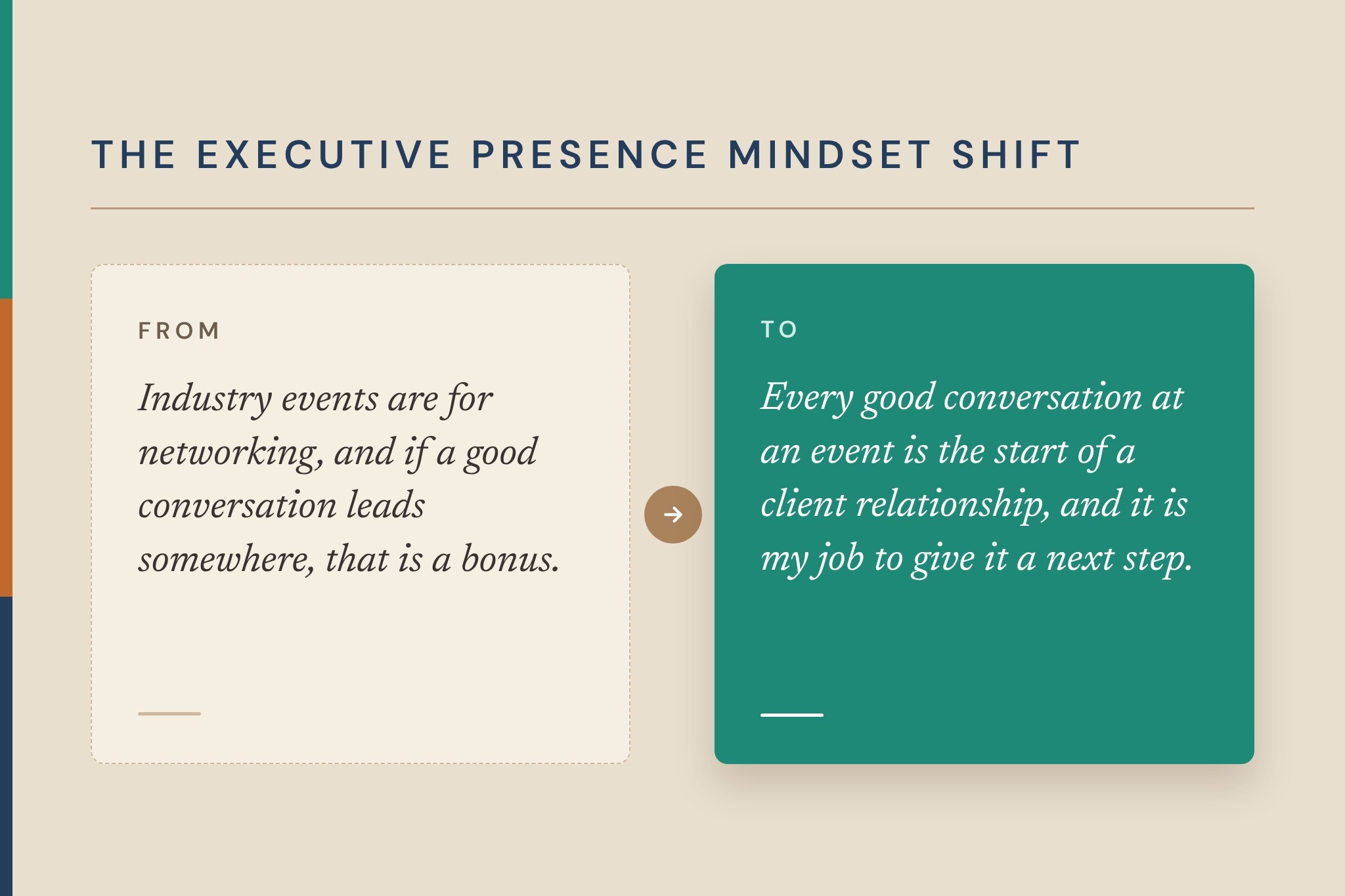


Most delivery leaders attend more events than they can count, from client summits and partner conferences to the industry forums where half the room seems to know each other already. They meet senior people, exchange cards, and have a handful of perfectly pleasant conversations, yet by the following week almost none of those conversations has turned into anything, and the whole exercise starts to feel like networking for its own sake.
The problem is rarely a lack of opportunity, because the people you meet at these events are often exactly the clients and prospects you would like to know better. It is that most event conversations stay on the surface, circling around the agenda, the venue, and what each person does, until someone glances at the time and the moment passes without either side learning anything worth following up.
Learning how to get a client to open up in these short conversations is what changes the outcome, and it is far less awkward than most people expect. A series of experiments found that people expected deeper conversations with strangers to feel more awkward and less enjoyable than shallow ones, yet afterward they found them less awkward, more connecting, and more enjoyable than they had predicted (Kardas, Kumar and Epley, 2022).
Step One: Arrive with One Genuine Question, Not a Pitch
Before the event, think about the theme of the day and prepare one question you are genuinely curious about, such as which part of a new regulation is causing the most work inside their organization, or what they wish their technology partners understood better. A real question gives the other person something worth talking about, and it makes them the subject of the conversation rather than your company.
This is what it means to engage clients at an event rather than simply meet them, because the question invites them into a conversation they want to have instead of one they feel obliged to sit through. It also takes the pressure off you, since you no longer need to think of something impressive to say about yourself.
Step Two: Let the Conversation Settle on What Matters to Them
Once the other person starts talking, pay close attention to the point where their energy changes, because that is usually where the problem they care about most is sitting. When they mention a program that is running late or a decision their board keeps postponing, ask one more question about it rather than steering back toward what your team does.
Resisting the urge to pitch at this moment is what keeps them talking, and it is often the most valuable form of getting client input early, long before any formal conversation about work. If they ask what you would do in their position, you can share a brief view and ask whether there are any other options they have been considering, which keeps the exchange a conversation between peers rather than a sales call.
Step Three: Close with a Small, Specific Next Step
Before you part, suggest one small thing that would be genuinely useful to them, such as sharing an article on the problem they described, introducing them to a colleague who has solved something similar, or setting up a short call with your team. A specific offer is far easier to accept than a vague promise to stay in touch, and it gives you a natural reason to follow up.
Send that follow-up within two days, and use their own words to describe the problem they mentioned, so that the message reads as a continuation of the conversation rather than a standard note. Many good conversations never become meetings simply because the follow-up arrived a week too late or sounded like it had been sent to everyone in the room.
Not every conversation will go well, and the ones that fall flat tend to replay in your head on the way home, which is why it helps to know how to stop being so hard on yourself and keep the bar high without turning one awkward exchange into a reason to stay quiet at the next event.
At Coach Vikram & Company, we would say that your delivery experience is your advantage at these events, because you can talk about the problems clients face with a depth that few people in the room can match. Leaders who come to executive presence coaching often discover that the conversations clients remember are the ones where they were asked a better question, not the ones where they were told the most.