


After a difficult year in which two people burned out, a manager becomes very good at spotting overwork. She notices late-night emails, checks in when someone looks tired, and protects her team's weekends. She's right to. But in the same months, one of her quieter team members has stopped being stretched at all. He's bored, drifting, and quietly updating his résumé. Nobody is overworked, so nothing on her radar flags him.
She was watching carefully. She was just watching for last year's problem.
Watching for the Last Gorilla
There's a well-known experiment in which viewers count basketball passes and many of them miss a person in a gorilla suit walking through the game. It has been shown so often that most people now know to look for the gorilla.
A later version of the video plays on exactly that. Viewers count the passes, and this time most of those who know the trick spot the gorilla. Then the video asks whether they also noticed the curtain behind the players changing color, or a player on the other team walking off. Many didn't. They were so busy watching for the gorilla they expected that they missed the changes they didn't.
That's a useful thing for any leader trying to tune in to your team to sit with. Knowing what to look for helps. It can also become the reason you miss everything else. That's uncomfortable for conscientious leaders, because the more carefully you watch for one thing, the more completely you can miss another.
Why Experience Can Make It Worse
The research behind the video makes the point plainly. People who already knew about the original gorilla were more likely to spot it, but they were no better at noticing the other unexpected changes (Simons, 2010).
Experienced leaders tend to carry a mental list of things to watch for: the signs of burnout, the warning signals before someone resigns, the tensions that sank a project two years ago. That list is valuable. It's built from real lessons. But it also quietly sets the filter. Whatever isn't on it has to be very loud before it gets through. A leader who once lost a project to poor communication may watch every meeting for misalignment, and miss that the real issue this time is a skills gap nobody has mentioned.
New team members, new pressures, and new kinds of problems rarely match the list. They show up as small changes that don't look like anything you've seen before.
Looking for What's Changed
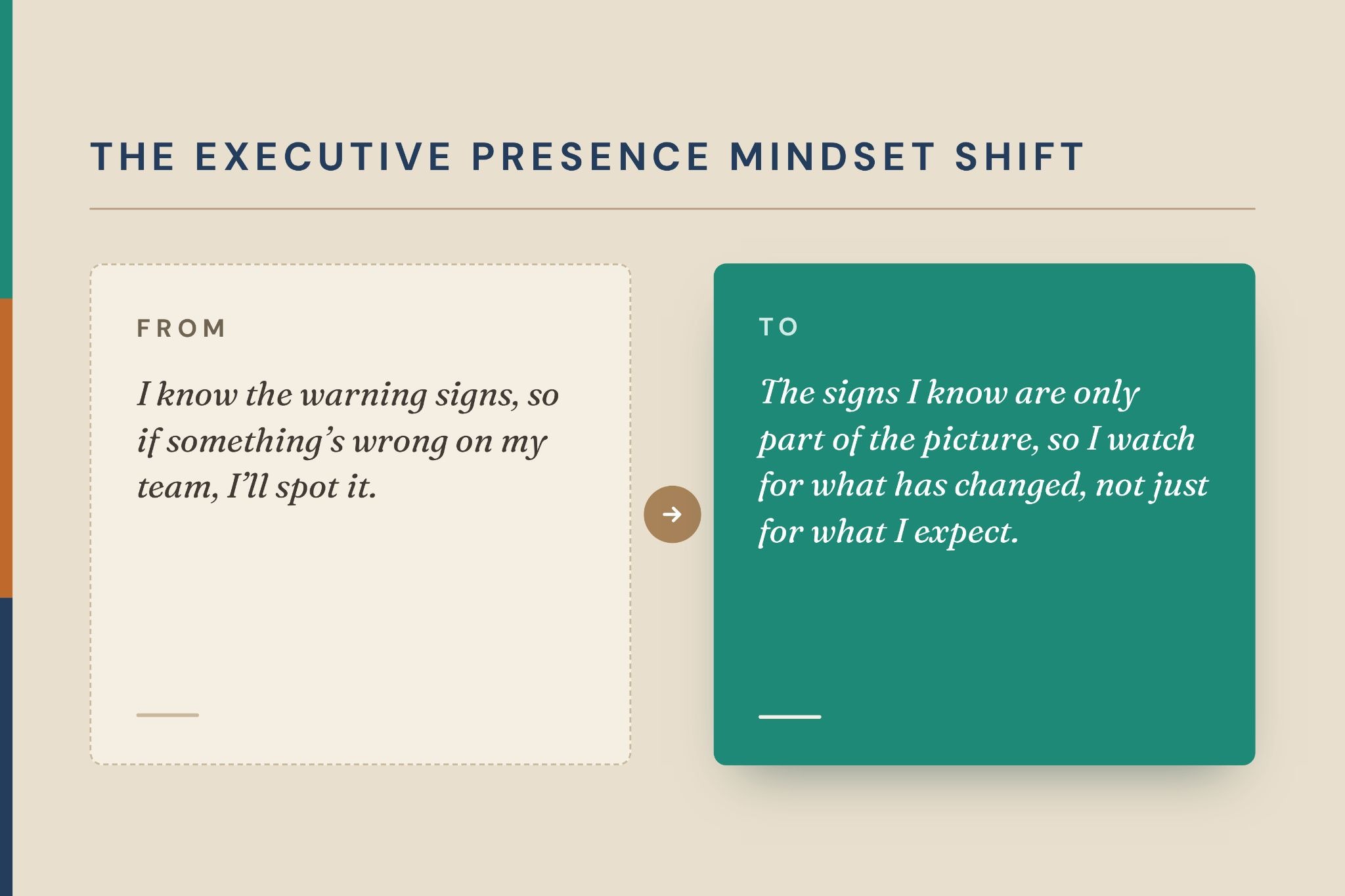
A more reliable approach is to watch for change rather than for specific problems. Instead of asking yourself "Is anyone burning out?", ask "What's different about this person compared with a month ago?" The answer might be a sign of overwork. It might equally be someone who has gone quiet in meetings, stopped volunteering ideas, or started asking unusual questions.
Some leaders keep a few lines of notes after each one-to-one, and read last month's before this month's conversation. It's a simple habit, and it makes change much easier to see, because you're comparing the person with themselves rather than with your list.
It also helps to let people tell you what's changed, instead of checking only for what you expect. An open question at the start of a one-to-one often surfaces more than any checklist. Many of the best conversation starters for leaders begin with something you've noticed and genuinely don't understand yet. And when someone brings you a problem, asking whether there are any other options they've been weighing can reveal what's really on their mind.
None of this means abandoning the lessons of experience. The burnout signals still matter. The point is not to let them become the only thing you're watching. Nobody notices everything. The aim is a wider filter, not a perfect one.
Much of executive presence coaching focuses on how leaders show up for others. A good part of that is what they're tuned to notice once they're in the room. At Coach Vikram & Company, we would say the most attentive leaders aren't the ones with the longest list of warning signs. They're the ones who keep noticing what's new.