

Most weekly check-ins open the same way. "How's everything going?" "Good, busy." A nod, and then the conversation turns to the list the manager brought along: the deadline, the numbers, the thing that needs chasing. Twenty minutes later, both people leave having swapped information and very little else.
Now picture the same slot, but the manager starts somewhere else. They ask about the part of the project the other person chose to take on, or the problem they've been quietly fixing on the side. The answer runs for ten minutes. The person sits forward, talks faster, sketches something on a notepad. Same two people, same room, a different conversation.
Why "How's It Going?" Rarely Starts Anything
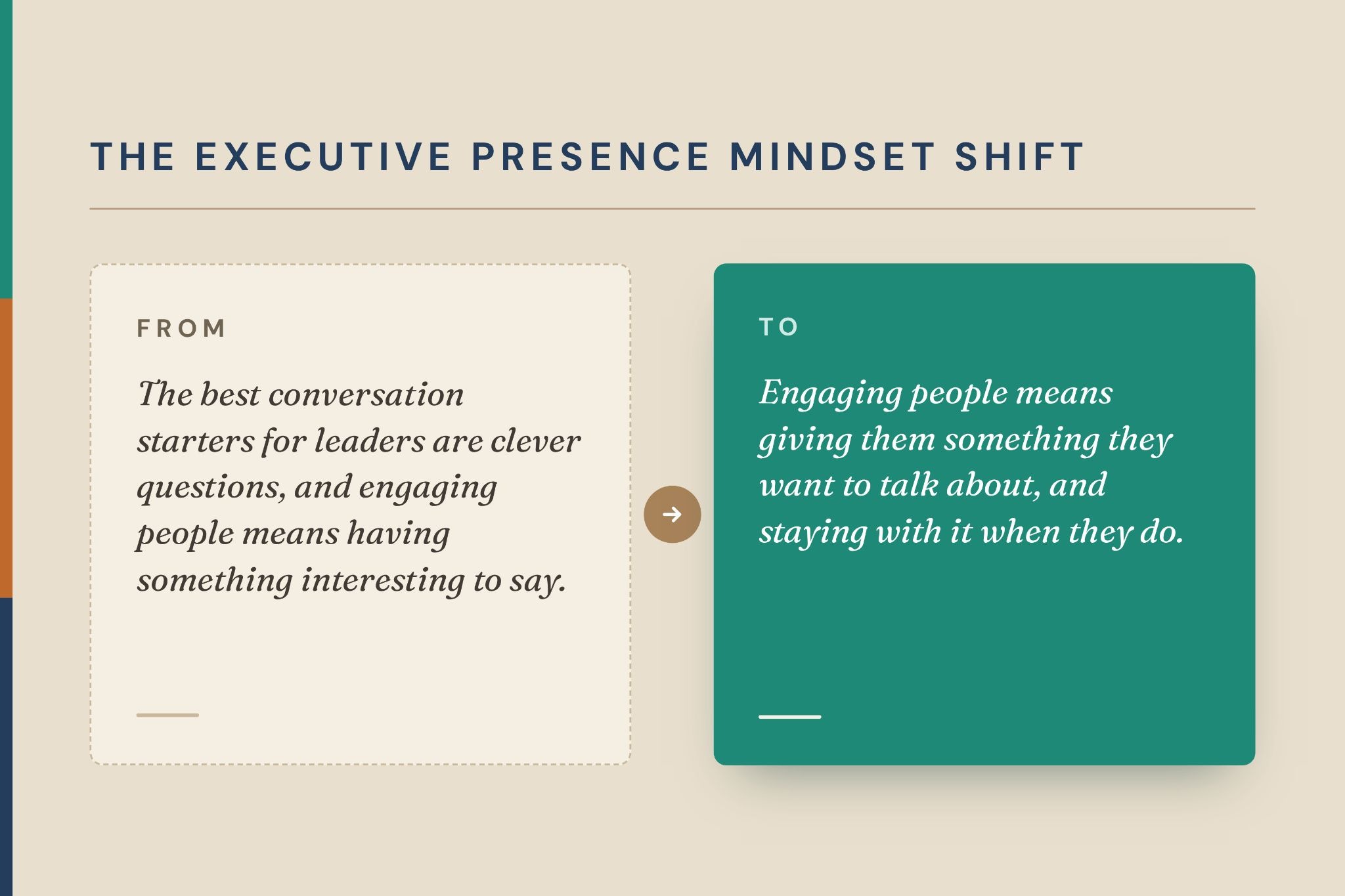
Most advice on conversation starters for leaders is about finding clever questions. Cleverness isn't really the problem. The standard openers are closed questions in disguise. "How's it going?" invites "fine." A question to the whole room at the end of a meeting, or "Are there any other options?" once a decision already seems settled, tends to be met with silence, because everyone can tell the real conversation is over.
A question starts something when the other person can tell you want the answer, and when it's about something they have a stake in. Usually that means asking about their work rather than your agenda: what they're proud of, what's annoying them, what they'd do if it were their call.
That is also a large part of how to get your team to speak up in meetings. People rarely stay quiet because they have nothing to say. More often, nothing they've been asked has given them a reason to.
The Question Is Only the Spark
A good first question opens a door. What happens next decides whether anyone walks through it.
Plenty of leaders ask a good question, get half an answer, and take the conversation straight back: "Great. Now, about the timeline." The other person notices, and next time they keep the answer short.
What tends to draw people in is the follow-up. In one set of studies, people who asked more questions, particularly follow-up questions, were better liked by the people they were talking with (Huang et al., 2017). A follow-up shows that what was said actually registered. "What made you pick that approach?" or "What happened next?" costs nothing and tells someone their answer mattered.
You can usually see when it's working. People lean in, speed up, start using their hands. That shift is worth more than any icebreaker, and it's worth staying in rather than rushing past.
It doesn't work the same way for everyone. Some people come alive in the moment, while others go blank when put on the spot and do their best thinking later. For them, a question sent ahead of time, or a simple "Have a think and tell me tomorrow," can open more than any live exchange.
What Changes When People Light Up
Once someone has been drawn into a real conversation with you, the next one starts from a different place. They bring you problems earlier. They offer ideas in meetings instead of waiting to be asked.
Sometimes a question opens something harder than you expected, like a frustration, or a complaint that turns out to be about you. It's tempting to steer back to safer ground. Staying calm under pressure in that moment matters, because your response decides whether the person ever opens up like that again.
A short film from the food-delivery company Swiggy shows how little it can take: a customer, a delivery rider, a doorstep, and a moment of attention that turns a routine handover into a real exchange.
Much of what gets packaged as executive presence training is about how a leader holds a room. Holding a single conversation well gets less attention, though it's where a lot of presence is actually built. At Coach Vikram & Company, we would say the most engaging person in a conversation is rarely the one doing most of the talking.
If you ever work with an executive presence coach, ask them to watch what happens after your first question in a one-to-one, not the question itself. That's where most conversations quietly end.