


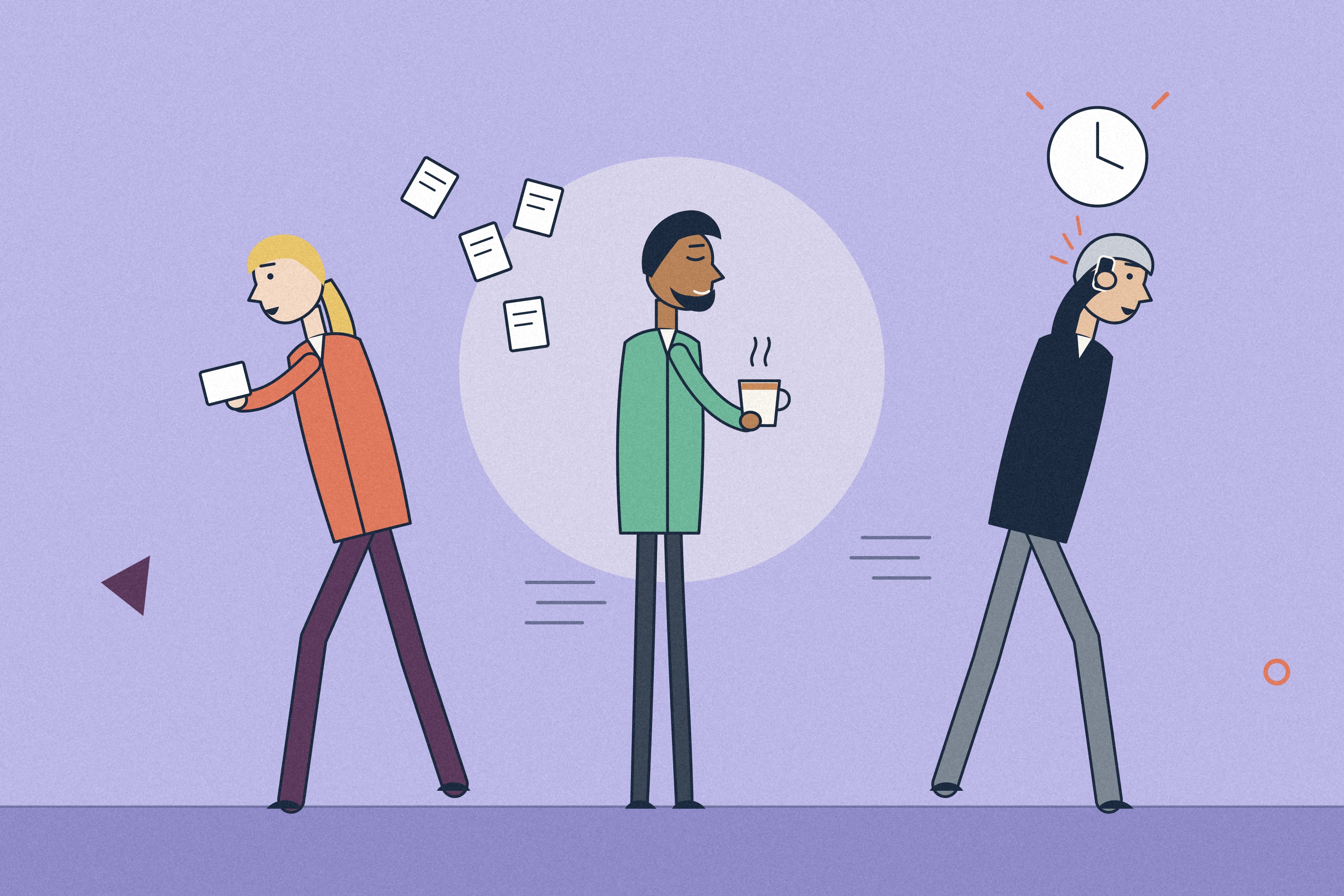
Every senior leader knows the moment. You are in the room, things are going fine, and then something lands that you were not ready for. A pointed challenge in front of the board. A decision that has just gone badly. A question clearly designed to see whether you will hold. You feel the heat rise and the pulse quicken and the urge to answer fast and defend, and whatever you do in the next few seconds is what the whole room will read as your composure, or the absence of it.
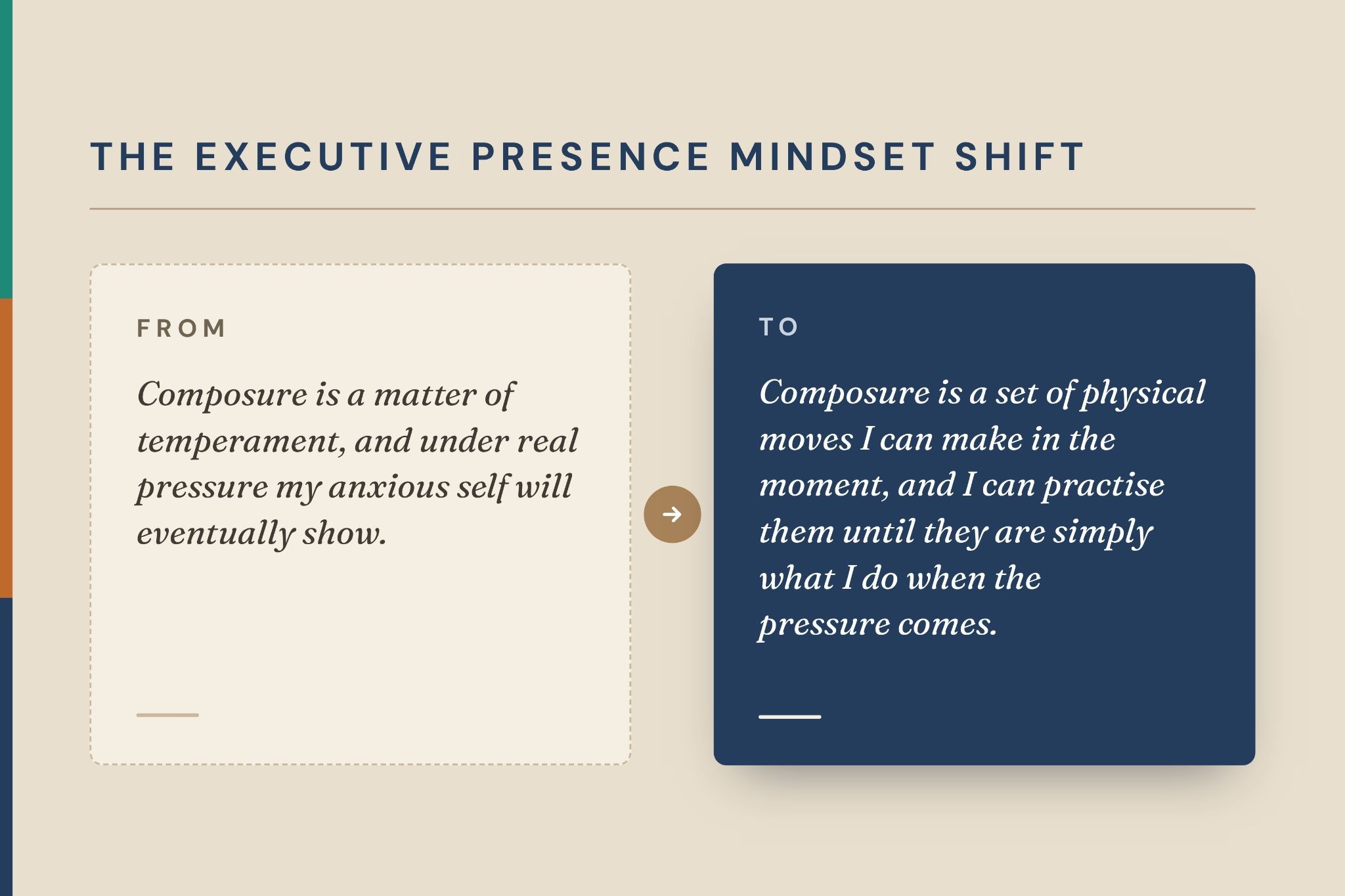
It is tempting to conclude that composure is a matter of temperament, that some people are built calm and others are not, and that under enough pressure your more anxious self will eventually show. That belief is worth letting go of, because it is not how composure works. What looks like a calm temperament is almost always a set of learned responses, small things the composed leader does in the pressured moment, often without realising, that keep them regulated long enough to respond well rather than react badly.
You Cannot Think Your Way Calm, So Stop Trying
The reason the usual advice to stay calm under pressure often fails is physiological. When pressure hits, your body produces a genuine stress response, and that response is considerably faster than your thinking mind. By the time you tell yourself to be calm, your heart rate may already be up and your system primed to react.
You cannot simply reason your way out of a physical event. Trying to do so can layer frustration on top of the stress. Composure is not won in the mind. It is won in the body, in the few seconds between what happens and what you do about it.
What does work is physical, because a physical intervention meets the stress response on its own terms. A slow breath out, longer than the breath in, begins to settle the response that is trying to hijack you. Noticing your feet on the floor pulls your attention out of spinning thoughts and back into your body. And allowing a short silence before you speak gives your system those few seconds to settle, while also signalling to the room that you are not being driven by the pressure of the moment.
A systematic review of slow-breathing research found effects associated with physiological calming and subjective states such as alertness and control (Zaccaro and colleagues, 2018).
There is a limit to all of this, worth naming. These moves buy you seconds, and what you do with the seconds depends on whether you can see what is actually happening in the room rather than what you fear is happening.
3 Ways to Practice This Week
1. Breathe out slowly before you respond, making the out-breath longer than the in-breath.
When something lands and you feel the heat rise, do not answer into it. Take one breath where the exhale is deliberately slower and longer than the inhale, and only then begin to speak. It takes about three seconds, nobody can see you doing it, and the long exhale is what physically tells your body the threat has passed.
2. Notice your feet on the floor the moment you feel challenged.
As the pressure spikes, deliberately register the contact between your feet and the ground. It sounds too simple to matter, and it pulls your attention out of racing thoughts and back into your body, which is far harder to rattle than a mind spinning in the abstract.
3. Let the silence sit before you answer a difficult question.
The instinct under pressure is to fill the gap instantly, to prove you are unshaken by answering fast, and a rushed answer is exactly what signals that you were rattled. Let a beat of silence sit while you take that breath, then respond. To everyone watching, a leader comfortable with a moment of silence looks like a leader in command of the room.