

You have worked on the proposal for weeks. You care about it, perhaps more than you have let on. In the meeting, a senior colleague pushes back, firmly and in front of everyone: the timing is wrong, the case is thin, it is not a priority. You answer, but something has shifted. Your voice is tighter. You over-explain. Later, alone, it stays with you far longer than it should.
Most capable leaders have had a version of this moment, and it says very little about their ability. It says more about how closely they tie their ideas to themselves. Learning how to handle pressure at work in these moments is less about staying unmoved and more about three steps that keep your thinking clear and, over time, change how others see you under challenge.
Step 1: Separate the Idea From Yourself
Pushback is a form of feedback, and feedback does not always help. A large review of feedback research found that while it improved performance on average, it made things worse in more than a third of cases, particularly when it drew people’s attention toward themselves and away from the task (Kluger and DeNisi, 1996).
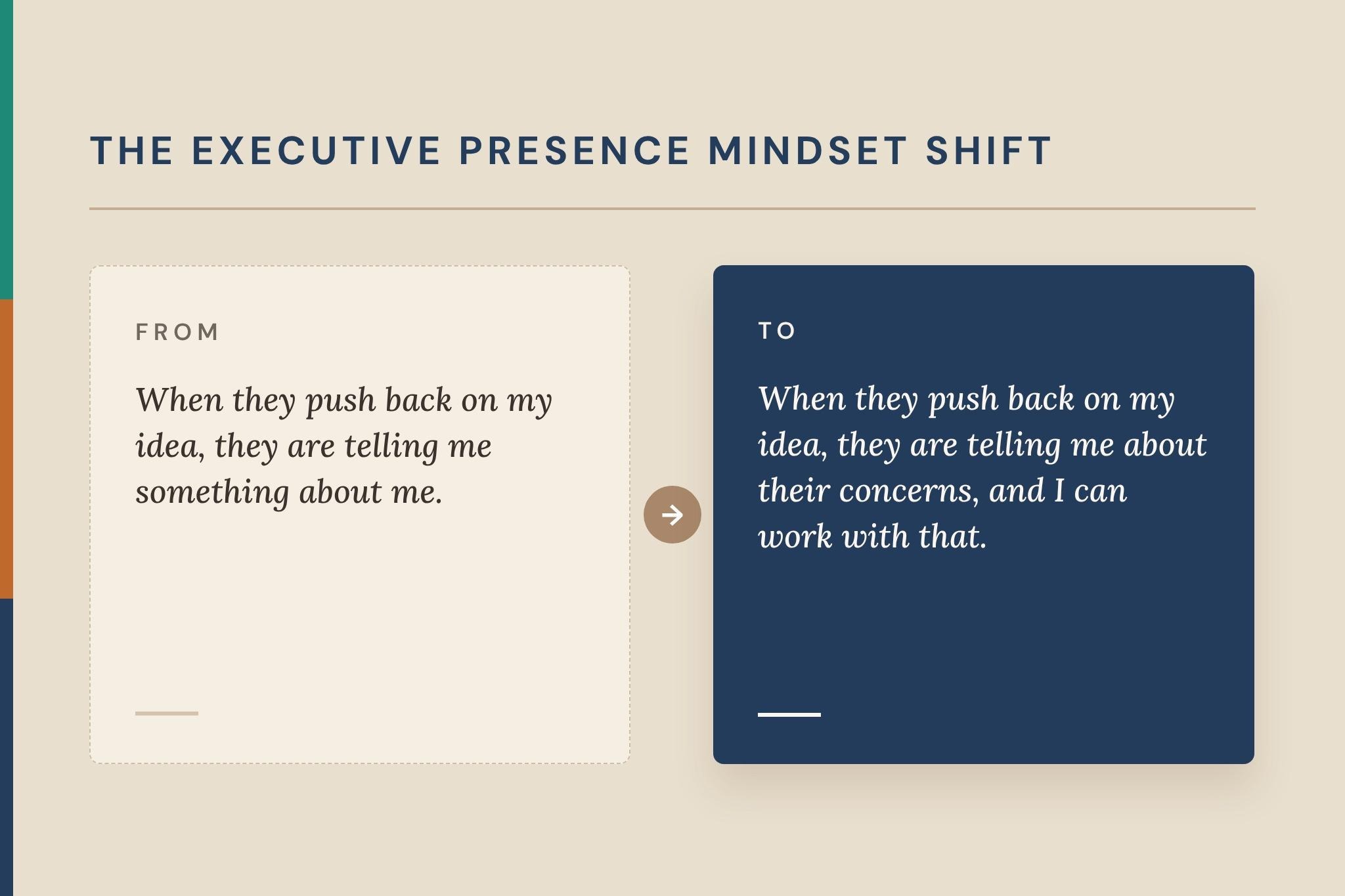
That pattern is easy to see in meetings. The moment the question in your head becomes “What do they think of me?” rather than “What is their concern?”, your thinking narrows. You defend instead of explore. Often the shift shows up physically first, as a tightening voice or a quicker pace, before you are aware of the thought. Others notice, because composure under pressure shows most clearly in how well someone keeps thinking while being challenged.
It also helps to notice who pushes back. The senior people who challenge an idea hardest are often testing whether it will survive scrutiny elsewhere. Their pushback is a rehearsal for questions it will face later, and the person who seemed most opposed sometimes becomes an unexpected ally.
Step 2: Ask Before You Defend
Meet pushback with a question before you meet it with an argument. “What makes the timing feel wrong to you?” “Which part of the case feels thin?” The question buys you a few seconds, and it moves you from defending to understanding. It also slows the exchange down, which matters more than it seems, because a rushed reply to a challenge almost always sounds more defensive than intended.
It also gets you better information. “This isn’t a priority” might mean not this quarter, or not at this cost, or not without another team on board. If you ask whether there are any other options they would support, the disagreement often turns out to be much smaller than it looked. None of this means agreeing to everything. A leader who stays calm under pressure can disagree without heat, and a calm disagreement is far harder to dismiss than a defensive one. It also leaves the door open for a second conversation.
Step 3: Come Back With the Idea Improved
Some of the most costly moments come after the meeting. A first rejection gets treated as final, and the idea is quietly shelved. Often the more useful response is patience. Go back a week later with the concern addressed, or ask the person who pushed back to help shape the next version. They are under pressure too, and their objection may be the clearest summary available of what the idea still needs. Persistence of this kind is not stubbornness. It is the ability to absorb a setback without taking it as a judgment on your worth.
Before you return, widen your view. Attention tends to lock onto the one person who challenged you, and knowing how to read the room in meetings tells you whether a concern is shared or belongs to one voice.
At Coach Vikram & Company, we would say that staying composed under pushback is less about controlling your feelings than about keeping your attention on the problem rather than on yourself. It comes up often in executive presence coaching, especially for leaders whose ideas are now tested in larger, less familiar rooms.