
Most delivery leaders have lived through some version of the same surprise, when a renewal that looked certain is suddenly put out to tender, or a program that seemed secure is quietly folded into a consolidation exercise run by people you have never met. Looking back, the signs were usually there, yet at the time they were scattered across different meetings and easy to explain away one at a time.
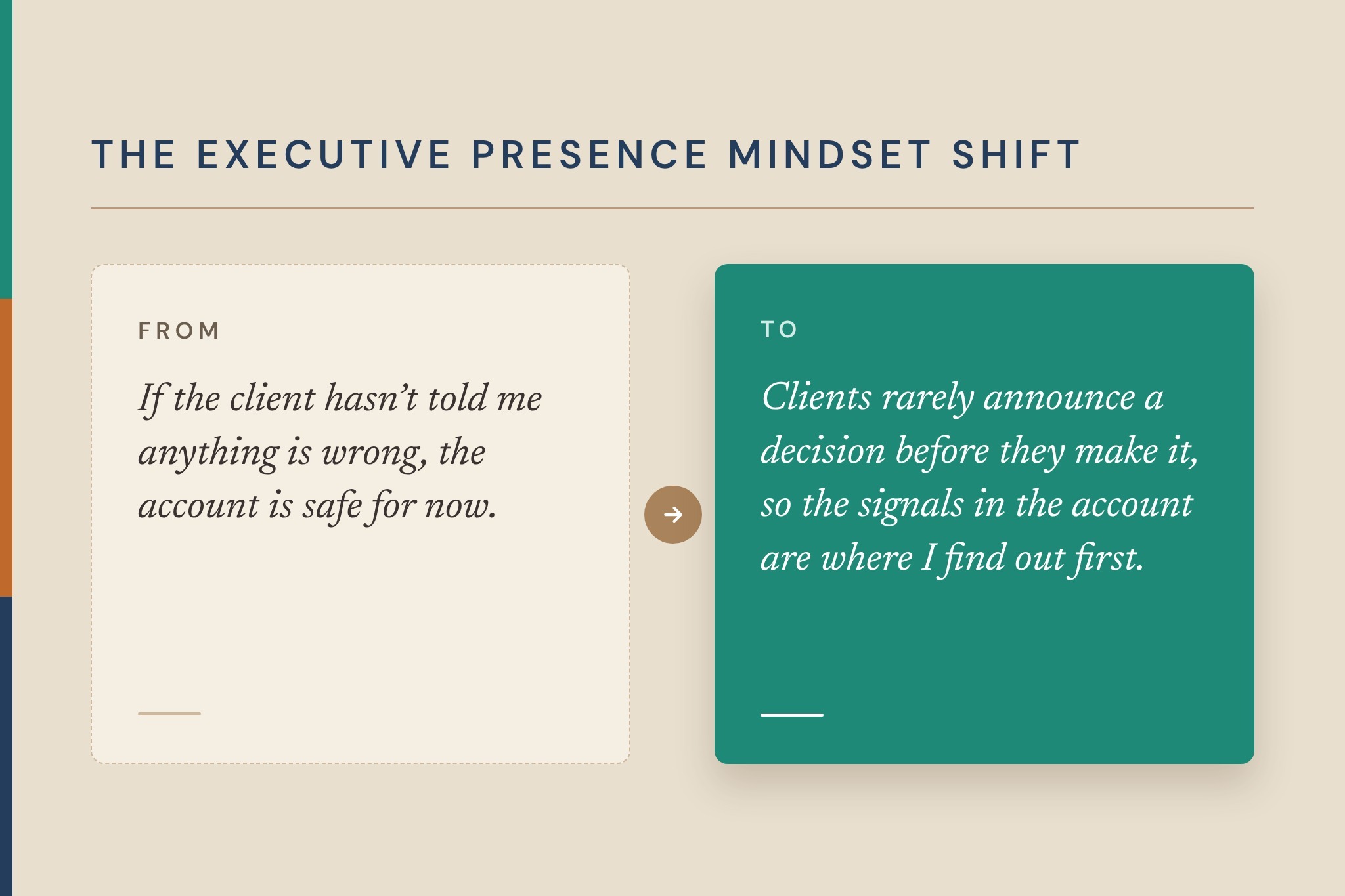
Clients rarely announce a decision about an account before they have made most of it, because the conversations that matter happen inside their own organization, in budget reviews, architecture boards, and procurement meetings that no vendor attends. What reaches you are the side effects of those conversations, and learning to read them is what separates a leader who is told about a decision from one who has a chance to shape it.
Knowing how to understand client decision making therefore starts with treating small changes in the account as information rather than noise. Research on weak signals makes the same point, arguing that the early signs of a coming threat or opportunity are usually present but muddied and incomplete, and that organizations tend to miss them by jumping to the most convenient explanation (Schoemaker and Day, 2009).
Signal One: New Faces Appear in Your Meetings
When someone from procurement, finance, or the client’s enterprise architecture team starts joining calls that used to involve only your usual contacts, it is worth asking what has brought them there. The same is true in reverse, because a sponsor who quietly stops attending is often spending their time on a decision you have not yet heard about.
Paying attention to who makes decisions at the client, and noticing when that group changes, gives you a far more accurate picture of where the account is heading than any status report. A simple question to your main contact about what has prompted the new involvement usually tells you more than weeks of guessing, and it shows your contact that you are paying attention to their organization in a way most clients quietly appreciate.
Signal Two: The Questions Change Shape
For most of an engagement, clients ask about progress, quality, and dates, because they are focused on getting the work delivered. When those questions start to sound like “What would it cost to bring this in-house?” or “Could you document how all of this is run?”, the client is often testing an alternative, even if nobody has said so.
These are among the most reliable early warning signs of account churn, and they deserve a direct and unhurried response. Rather than answering defensively, you can ask what the client is trying to understand, and whether there are any other options they are weighing that your team could help them think through honestly.
Signal Three: Small Approvals Start to Slow Down
A client who used to sign off a change in two days and now takes two weeks is rarely just busy, because delays in routine approvals often reflect uncertainty further up the organization. Budgets may be under review, a new leader may be reshaping priorities, or the account itself may be the subject of a wider conversation.
Noticing the pattern lets you ask the question that matters while there is still time to act on the answer, which is how understanding client politics becomes useful rather than merely interesting. None of these signals proves that a decision is being made, and that is precisely why they are worth raising as questions rather than as conclusions. Bringing these observations into your client account planning turns a vague unease into a concrete conversation with your own leadership about where the account really stands.
Many of these signals are easiest to catch in the meetings you run yourself, which is why it pays to know how to read the room in meetings you are leading, since the earliest signs often show up in who speaks, who hesitates, and who stays silent.
At Coach Vikram & Company, we would say that your delivery experience is your advantage here, because you see the client’s organization in motion every week in a way their other vendors rarely do. Leaders who come to executive presence coaching often discover that the most valuable thing they bring to an account is not only what they deliver but what they notice, and when they choose to say it.