

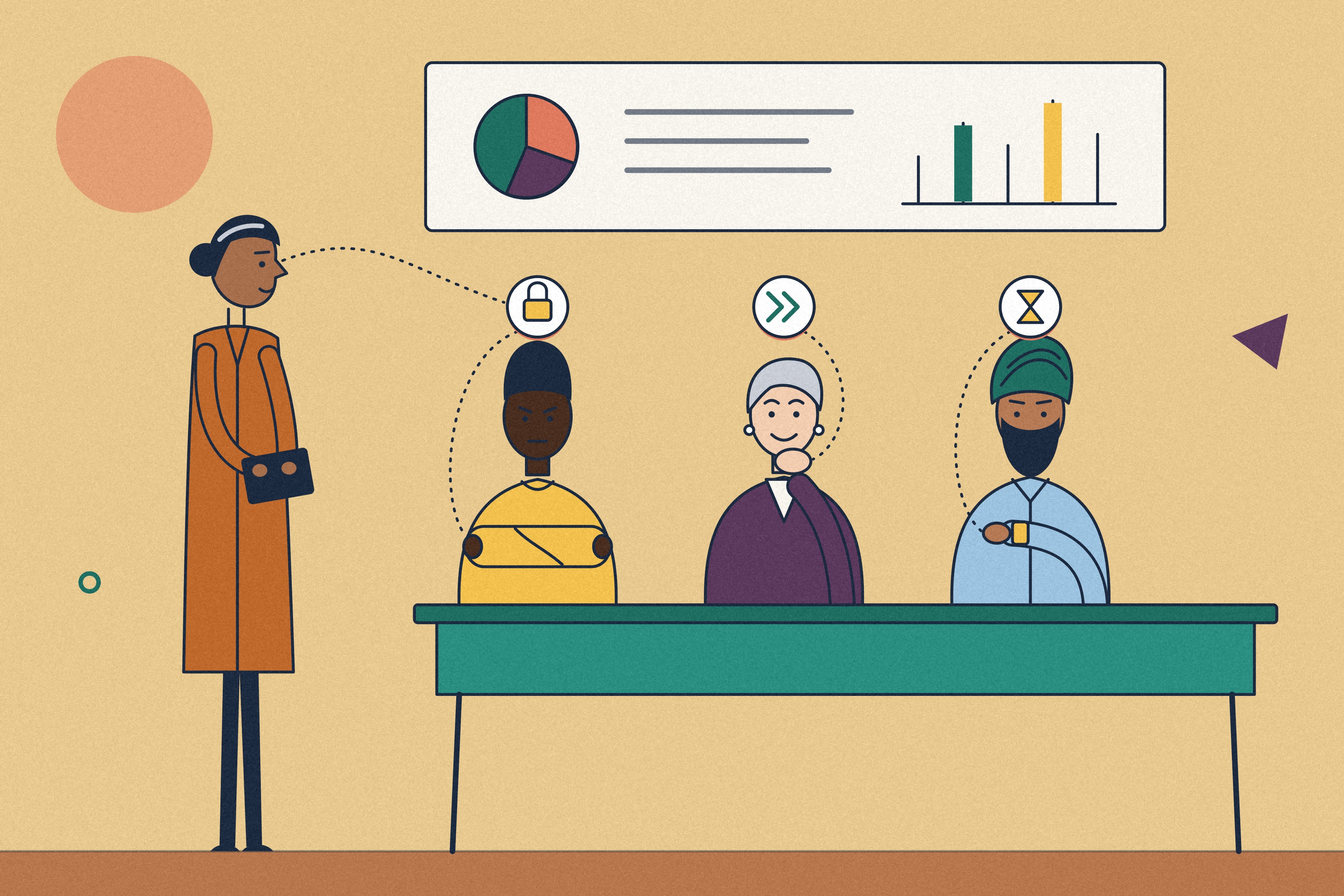
A leader finishes walking the team through a new plan and asks whether anyone has concerns. Nobody does. A couple of people nod, and the meeting ends ten minutes early, which feels like a small win.
Three weeks later the plan has stalled, and the objections that surface are not new. They were in the room all along. One person stopped writing halfway through the second slide. Two others exchanged a look when the deadline came up. And when someone asked, "Are there any other options?" it came out flat, less a question than a quiet vote against.
None of this was hidden. It just went unnoticed, which is a different problem, and a more fixable one.
Body Language is Not a Dictionary
Most advice on how to read body language in meetings starts with a list of gestures and what they supposedly mean. Crossed arms signal resistance. Leaning back means you've checked out.
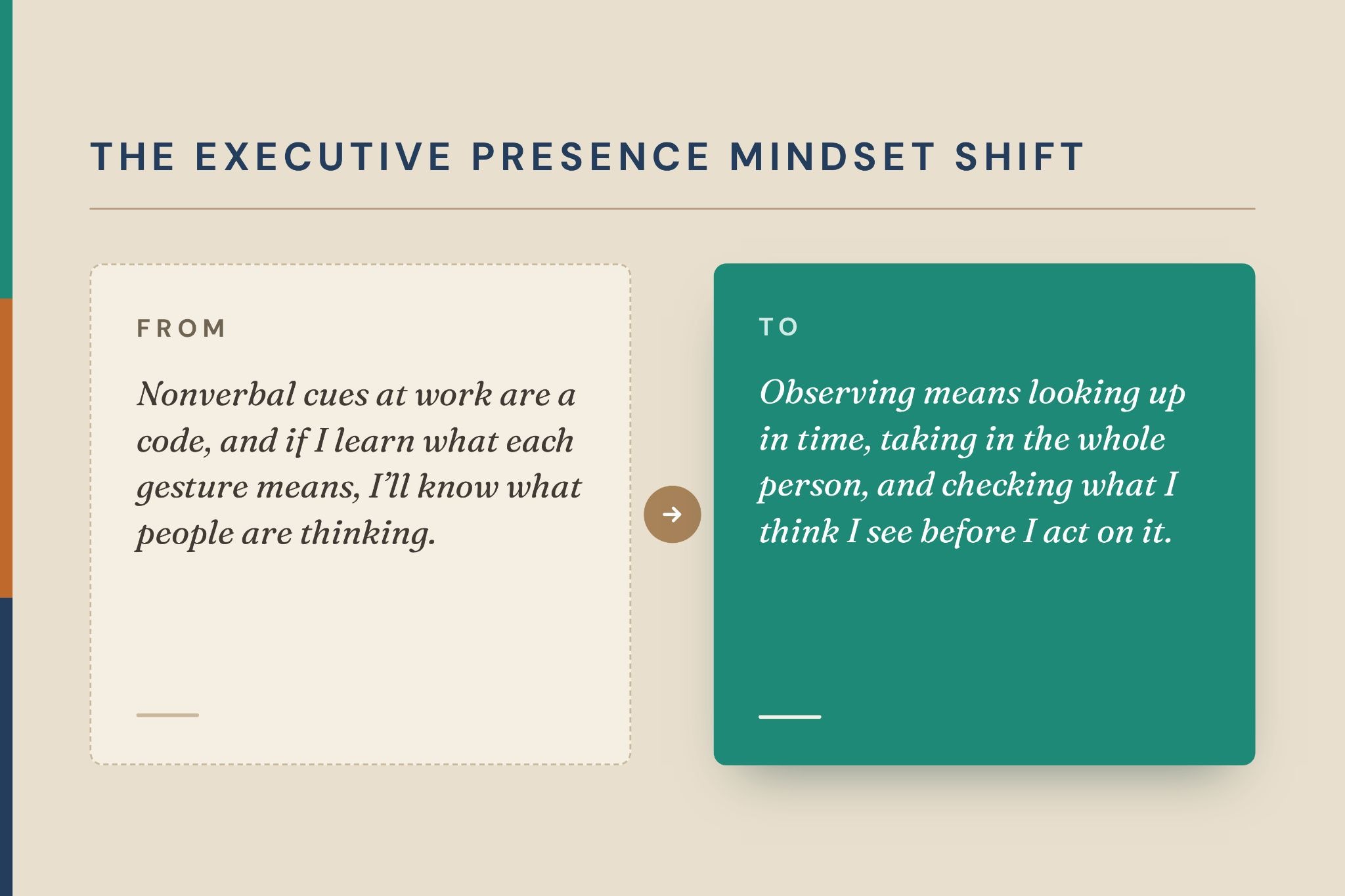
It sounds like a code you could learn by the weekend. People are not that consistent, though. Crossed arms can mean someone is defensive, or cold, or simply comfortable sitting that way. A person staring at the table might be doubtful, or just thinking hard.
It may help to trust the overall impression more than any single signal inside it. Research on "thin slices" of behavior has found that people can form surprisingly accurate impressions of others from very brief observations of how they move, look, and sound (Ambady & Rosenthal, 1992). That makes a better case for nonverbal communication for leaders than any gesture chart. Take in the whole person, and keep noticing tone of voice, which often shifts before anything else does.
Why capable people miss what is in front of them
Usually this isn't a talent problem. It's a question of where your eyes are.
In most meetings, a leader's attention goes to the slides, their notes, their next point, or whoever is talking, often the most senior person present. On video calls it gets worse, because the face we look at most is our own. The people quietly reacting are the ones nobody is watching, and that is where the most useful nonverbal cues at work tend to come from.
There is inner noise, too. It's hard to take in anyone else's face while you are arguing with the voice in your own head, and for anyone dealing with imposter syndrome as a leader, that voice gets louder in the meetings that matter most.
A lot of what gets taught as executive presence training is about the signals you send, such as how you stand and how you sound. The quieter half of presence is what you take in, and it gets far less attention.
Andre Agassi tells a story about how he finally cracked Boris Becker's serve, a serve unlike anything the game had seen. After losing to him three times, Agassi noticed that where Becker's tongue sat on his lip, just before the toss, gave away where the ball was going. The information was there on every serve. It took someone watching the player, not the ball, to see it.
What You Do With What You See
Noticing only helps if it changes what happens next. If a colleague goes quiet when you reach the budget, you can press on and hope, or you can slow down and give them a way in. Something as light as "I get the sense this part lands differently for some of you" is usually enough. It accuses no one, and it lets the concern come out now rather than three weeks later.
It works the other way too. Someone who looks pleased when their project comes up is telling you something, and asking about it costs ten seconds.
At Coach Vikram & Company, we would say that most of what a room needs you to know is visible before anyone says it, and that the people worth following are the ones who looked up in time.
Hold what you see loosely. You are forming a guess, not reading a mind, and a question is what keeps the guess from hardening into assumption.
If an executive presence coach ever sits in on a meeting you run, ask them afterward what they noticed about the room, not about you. The answer tends to show you where you weren't looking.