


The night before her first presentation to the senior team, a young analyst messages her manager. "I don't think I can do this." He could send her a list of presentation tips. Instead he writes back, "Last week you explained the whole pricing model to me in five minutes, and I finally understood it. Do exactly that." She reads it three times. The next morning, she does exactly that.
Nothing in his reply was clever. It simply told her, specifically, that she could.
Why Motivation Rarely Comes from Speeches
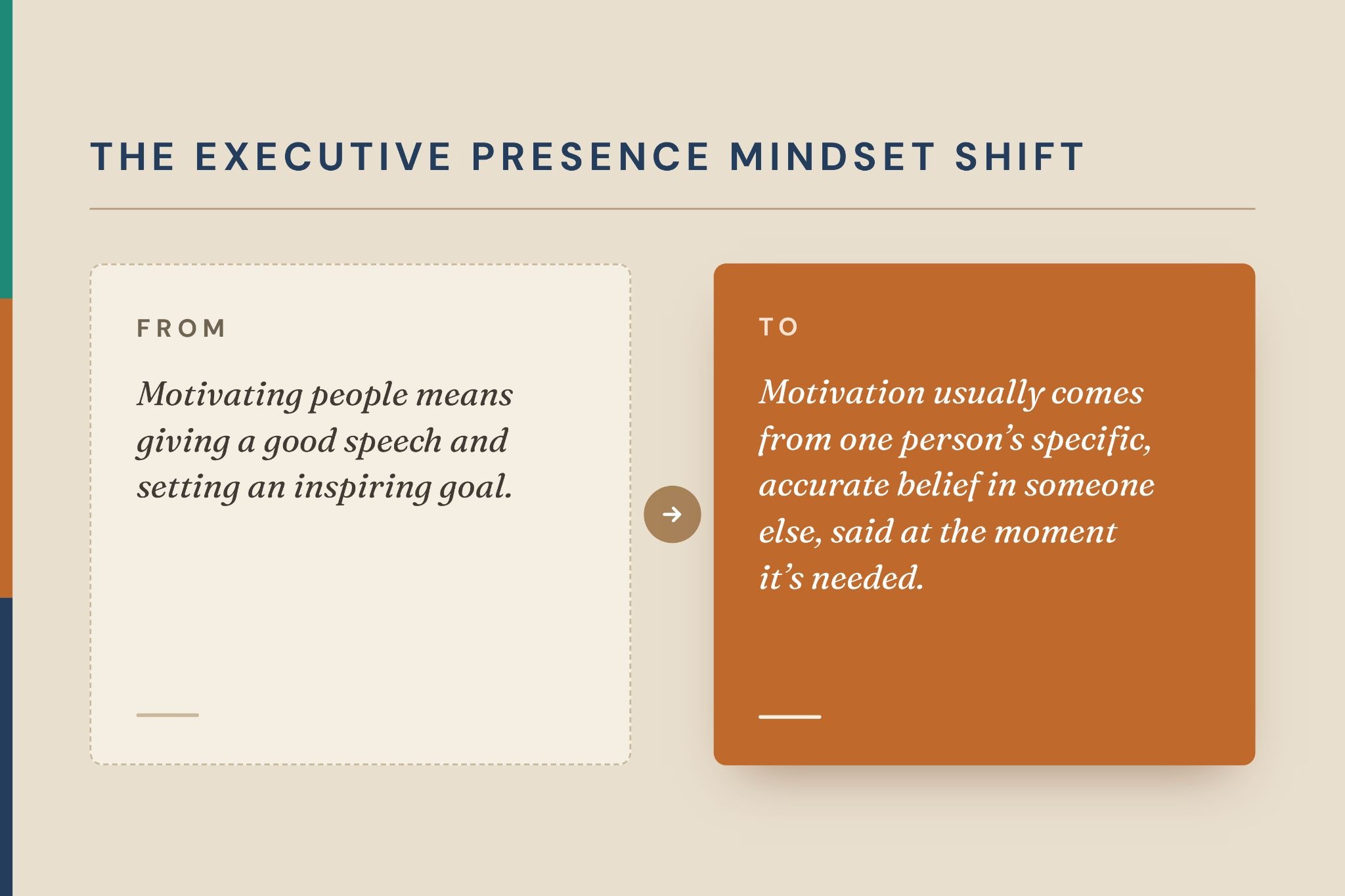
When leaders think about how to motivate your team, they often picture something big: an all-hands address, a stirring vision, a rallying slide at the start of the quarter. Those have their place. But ask people about a time they did better than they expected, and the story is rarely about a speech. It's usually about one person who believed they could do it, and said so at the right moment.
That kind of encouragement is small, personal, and easy to skip. It's also where a lot of real motivation lives.
The same goes for how to inspire your team. People are rarely inspired by a target. They're inspired when someone shows them a version of themselves they hadn't quite considered.
A Voice on the Other End of the Line
There's a scene in the Hindi film Lage Raho Munna Bhai that captures this. A radio host, with an unlikely adviser at his side, talks a nervous caller through a difficult moment over the phone. By the end of the scene, she walks out into the street smiling. What seems to have shifted isn't her situation but how she feels about facing it.
It's a film, and a gentle one, but the mechanism is real. People often rise toward what others expect of them. A review of studies in workplace and military settings found that when managers were led to expect more of the people they supervised, those people tended to perform better (McNatt, 2000).
That doesn't mean expectation alone does the work. It means that how a leader sees someone shapes how that leader treats them: who gets the stretch assignment, who gets patience after a mistake, who gets told "you can do this." Those small differences add up.
Belief Has to Be Specific
Encouragement only works if the person believes it. "You'll be great!" is warm, but it's general enough to dismiss. "You explained this to me in five minutes" is evidence. It points to something the person has already done and asks them to do it again.
That's most of what helping employees reach their potential looks like in practice. Not grand predictions about their future, but small, accurate reminders of what they're already capable of, offered just before they need them.
Timing matters as much as wording when encouraging employees. The night before, or the hour before, is when encouragement lands hardest. A week later, the same words are just feedback.
It also means resisting the urge to rescue. When someone brings you a problem, the quickest response is to solve it. A more encouraging one is to ask, "What would you try?" and then, "Are there any other options you can see?" People who work out their own answer are more likely to believe they can do it next time. Sometimes the thing they need courage for is disagreeing with someone more senior, and encouraging them to learn how to push back professionally does more for them than stepping in on their behalf.
There's an honest limit, too. Encouragement that isn't grounded in reality can set people up to fail. Telling someone they're ready for a role they clearly aren't ready for isn't uplifting. It's careless. Good encouragement is accurate as well as warm.
Much of executive presence coaching looks at how leaders come across. Just as revealing is how other people feel about themselves after time with that leader. At Coach Vikram & Company, we would say the leaders people remember are often the ones who saw what they could do a little before they saw it themselves.