


A manager finishes presenting a proposal she has worked on for weeks. The senior leader at the head of the table glances at the summary slide and says, "I don't think this is what we need right now." He moves to the next item. She nods, closes her laptop, and spends the evening wondering whether he even read page three, where the objection he seemed to have was already answered.
Most people have had a version of this. The verdict arrives fast, from someone with more power, and the moment to respond is gone almost before you notice it was there.
The Verdict Nobody Argues With
Knowing how to push back professionally matters most in exactly these moments, and they're the ones where people tend to say nothing. That isn't usually cowardice. It's a set of quiet rules most of us carry around about what you can and can't say to someone senior.
Researchers who studied why employees stay silent found that many follow unspoken rules of this kind, such as never challenging a boss in front of others or not speaking up without solid data, and that these beliefs lead people to censor themselves (Detert & Edmondson, 2011). Some of those rules are sensible. Many are stricter than the situation actually requires.
The cost of following them doesn't show up straight away. A proposal that dies quietly rarely comes back, and the senior person has no idea anything was lost. Over time, people who never push back don't get a reputation for being difficult. They get a reputation for not having much to say.
What Andy Says at the Door
The interview scene in The Devil Wears Prada is a useful one to watch with this in mind. Andy sits across from Miranda Priestly, who makes it clear within a minute that she sees no reason to hire her. Andy lists her journalism credentials. They land on nothing. She's told, in effect, that the interview is over.
She gets up to leave, and then she stops and turns back. She agrees with the part that's true: she doesn't fit in there. Then she says what she does bring. She's smart, she learns fast, and she will work very hard. It takes a few seconds, and it changes the conversation.
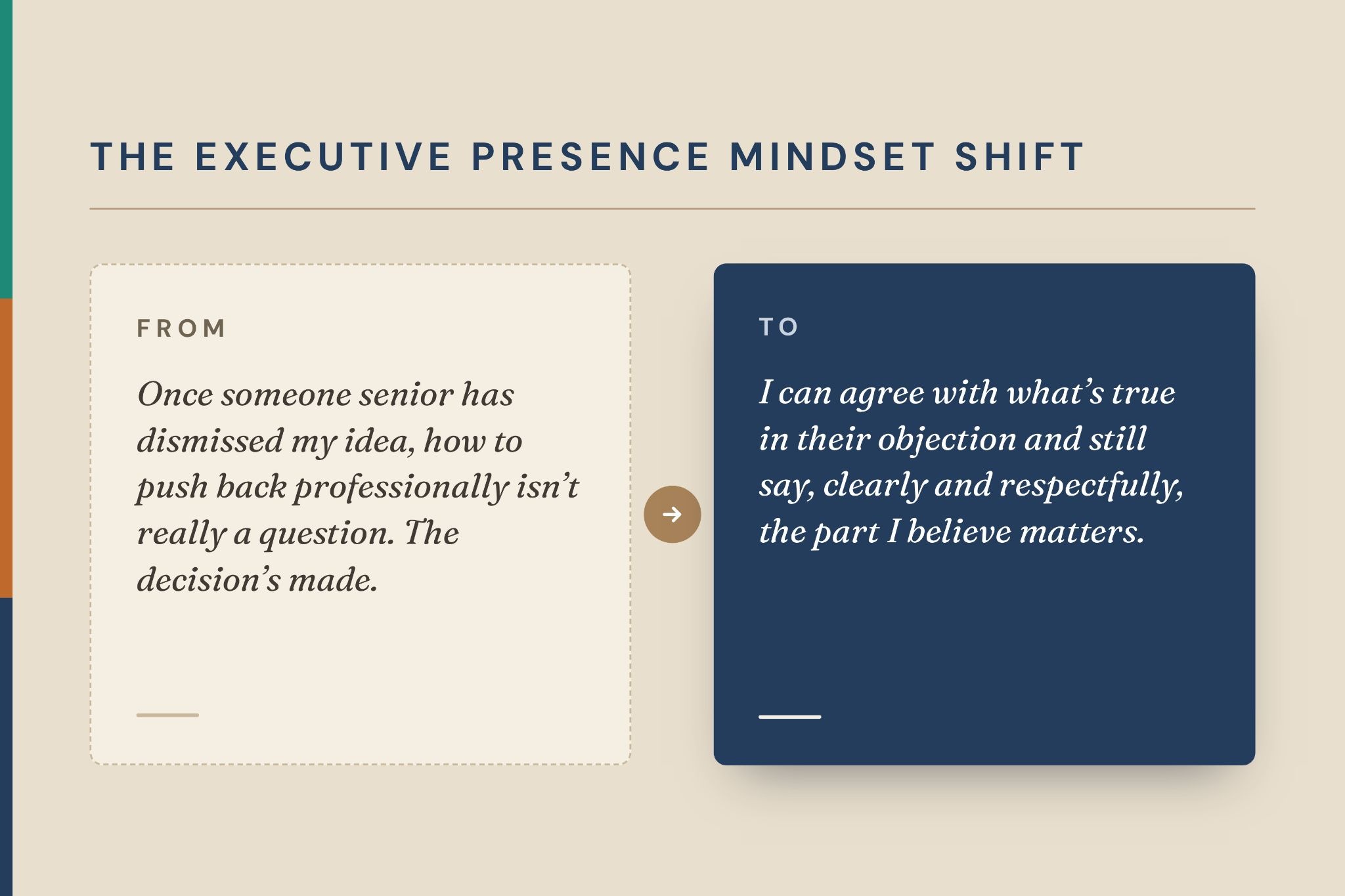
What makes it work isn't confidence or charm. It's that she doesn't argue with the verdict on its own terms. She concedes what she can't dispute and holds her ground on what she can. In the space of one sentence, she brings a better version of herself to the surface than anything she'd managed in the rest of the interview.
Conceding the True Part
This is often the missing piece in assertive vs aggressive debates. Aggressive pushback treats the whole objection as wrong. Assertive pushback is more selective. "You're right that the budget is tight. I still think the pilot is worth running, because it answers the question we keep coming back to." The first half lowers the temperature. The second half is where you stand.
The same applies when you're working out how to disagree with your boss. A flat "I disagree" invites a flat answer. "Before we commit, can we look at any other options? Here's what worries me about this one" is harder to wave away, because it gives a reason and asks for a response.
Sometimes the right move is to wait. If the senior person is rushed or the room is wrong, a short note afterward can do what the moment couldn't.
Pushback also says something about the person receiving it. If you’re on the other side of the desk, it costs very little to acknowledge when someone has held their ground well. Leaders who make people feel special tend to see thoughtful pushback as something worth recognizing, not shutting down. Over time, that sends a clear message to the team: you’re allowed to speak up here.
A lot of executive presence coaching focuses on what to say. Just as much depends on when: the doorway moment, the last minute of a meeting, the gap before the next agenda item. At Coach Vikram & Company, we would say that standing firm rarely requires winning the argument. It requires not leaving before you've said the part that matters.