

.jpg)
A manager walks into the weekly team call two minutes late, still finishing an email. "Great work on the launch, everyone. Really proud of this team." Then straight into the agenda. It is a kind thing to say, and nobody on the call feels anything much. The person who stayed up rewriting the launch plan hears exactly what the person who barely touched it hears.
Most people have been on both ends of that moment. Praise that could have been said to anyone doesn't really reach anyone.
Why "Great Job" Rarely Lands
When leaders think about how to make people feel valued at work, they often think in terms of frequency: say something positive more often. But people are quick to spot praise that's been produced for the occasion, and after a while they stop registering it.
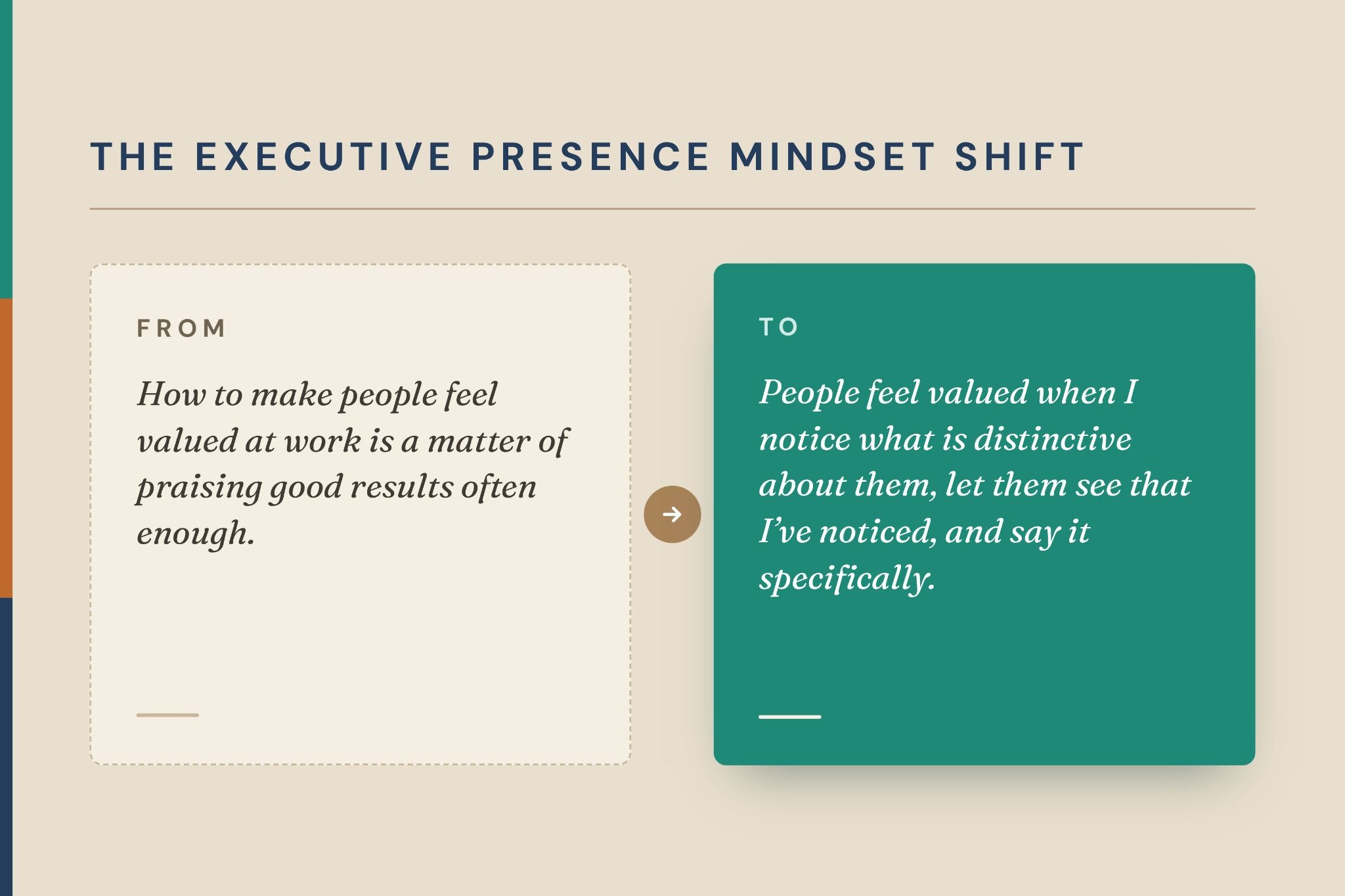
What lands is praise that could only be about them. "Your summary made the board meeting twenty minutes shorter" says something that "great job" doesn't. It shows you noticed what they did, and that you know it was them. That is what specific praise at work does that general praise can't.
Many people hold back even when they have something specific to say, because it feels awkward or unnecessary. Research on compliments suggests that people tend to underestimate how good a compliment will make the other person feel, and overestimate how awkward it will be (Zhao & Epley, 2021). The hesitation is mostly in the giver's head.
The Pause Before You Speak
There is a scene in the film Pretty Woman that is worth watching for one small moment. Richard Gere's character walks into a hotel bar looking for someone, catches sight of her across the room, and stops. He takes a moment to actually look at her before walking over or saying anything.
It's a transition pause. He is moving from one thing to the next, and instead of carrying the last thing into the new moment, he lets the new moment arrive. She can see that she has been noticed. By the time he speaks, most of the message has already landed.
At work, we rarely give people that beat. We arrive at conversations mid-thought, still carrying the previous meeting, and the person in front of us gets whatever attention is left over. A second's pause doesn't cost anything, and it changes what the other person sees on your face.
The same pause works when someone joins a call, walks into your office, or hands you something they've been working on for weeks. Look up from whatever you were doing. Let them see you take it in before you respond. It's one of the least effortful ways of making people feel special, and it doesn't require you to say anything clever.
Naming What Only They Bring
Recognizing people's strengths goes further than praising results. Results are what happened. Strengths are why, and they're usually more personal.
Take the colleague who always asks whether there are any other options just as a decision seems settled. It's easy to find that tiring. It's also possible to say, "You're the one who always makes us check, and it has saved us more than once." That turns a habit other people roll their eyes at into something they're known for, and quite often, into something they start doing more deliberately.
This matters most for people who don't believe good things about themselves. Someone feeling like a fraud at work will wave off "nice work" without a second thought. A specific observation is much harder to dismiss.
It's worth being honest about where this can go wrong. If it isn't true, don't say it. Flattery is about what you want from someone. This is about them. And not everyone enjoys being singled out in public, so some of the most useful things you'll say are better said one to one.
Much of executive presence coaching deals with how leaders come across. A quieter part of presence is what other people feel about themselves after spending time with you. At Coach Vikram & Company, we would say that the people others remember warmly are usually the ones who noticed something in them that no one else had put into words.