

The new role comes with a wider remit and a regional team you have only met on screen. In the first few calls, everything is polite and slightly stiff. Your jokes land unevenly. A colleague from another country answers your direct question with what sounds like a long detour. Someone else says yes to everything, and you are not sure what yes means. Nobody is being difficult. You simply have not found each other yet.
For leaders who built their careers inside one country, one site, or one function, this is often the first time connection does not come easily. At home, common ground was everywhere: the same references, the same unspoken rules, the same history. In a broader role, it has to be found on purpose, and a regional leader who never quite connects ends up relying on formal authority alone, which travels poorly across borders.
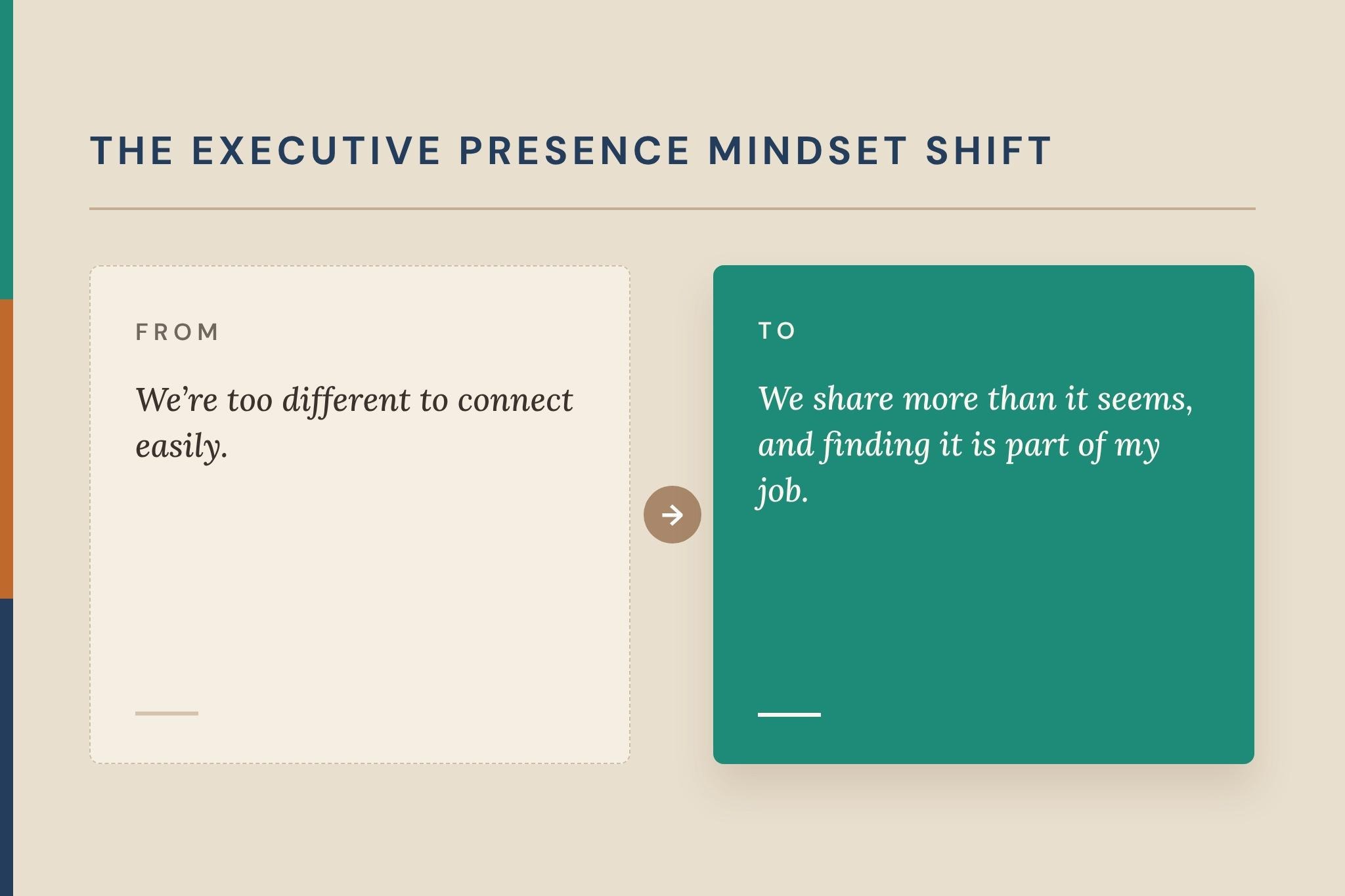
Learning how to find common ground with colleagues across cultures is less about mastering etiquette than about three shifts in where you look and how you respond.
Shift 1: Look for Shared Pressures, Not Shared Habits
The differences show up first: directness, formality, how quickly people get to business, how disagreement is expressed. They are real and worth respecting. But leaders who focus only on them tend to become cautious and formal, and caution reads as distance.
Underneath, most professionals share a surprising amount: pressure to deliver with limited resources, a boss who wants it sooner, a team they feel responsible for, a career they are trying to build. Those are shared interests at work, and they cross borders far more easily than humor does. It also helps to remember that colleagues are likely making the same effort from their side. A regional team often wonders what a new leader really wants from them, and showing that you share their pressures, rather than simply passing down expectations, answers that question early.
Research supports looking here. A large review found that the similarity people perceive in each other is strongly linked to how much they like each other, and that perceived similarity mattered at every stage of a relationship, while actual similarity did not predict attraction in established relationships (Montoya, Horton and Kirchner, 2008). What you notice and name may matter more than how alike you really are.
Shift 2: Ask About Their World, Then Name the Overlap
The quickest route to common ground is a genuine question about the other person’s context. What does a good year look like in your market? What is hardest about your role right now? What does headquarters tend to misunderstand about your region?
The answers almost always contain something you recognize. When they do, say so. “We have exactly the same problem with lead times.” Naming the overlap turns a conversation between strangers into one between people facing similar things. If a colleague then asks whether there are any other options for that shared problem, you can work on it together rather than across a table.
Small talk with senior leaders from other cultures deserves care. In some places, personal questions early on feel warm. In others, they feel intrusive. Starting with work-related curiosity, and letting the other person decide how personal to go, is a safe route almost everywhere.
Shift 3: Read Differences as Habits, Not Character
Sometimes differences produce friction. A colleague who never says no misses a deadline. Another who argues openly in meetings seems disrespectful. It is easy to read these as character flaws rather than habits shaped elsewhere, and letting go of judgment at work makes it far easier to see the person behind the behavior. Asking what a behavior means where they work, before deciding what it means to you, keeps the common ground you have already found.
At Coach Vikram & Company, we would say that common ground is rarely discovered by accident in a global role. It is found by leaders who go looking for it. That shift comes up often in executive presence coaching with leaders moving from national or functional roles into regional ones.