


A team member comes to her manager, upset. A client she has worked with for two years has just been handed to someone else, and nobody told her first. Before she has finished the second sentence, the manager is already solving it. He'll talk to the account lead. Maybe there's a way to get her on the next big pitch. Has she thought about asking for a development plan?
All of it is reasonable. She leaves feeling worse than when she arrived.
"Help Me Help You"
There's a scene in Jerry Maguire that captures this kind of exchange perfectly. In a locker room after a game, the sports agent Jerry and his only remaining client, Rod, end up shouting past each other. Rod is frustrated, and tells Jerry he doesn't know what it's like to be him. Jerry, increasingly desperate, pleads with him: "Help me help you."
It's a great line, and a revealing one. Jerry genuinely wants to help. But in that moment, he's asking Rod to make his job easier, while Rod is asking to be understood first. Neither gets what he needs, because each is waiting for the other to do it.
Most workplace versions are quieter, but the structure is the same. Someone brings a problem, and the person they bring it to reaches for a solution before the person feels understood. Learning how to be a better listener at work often starts with noticing that gap.
Why Fixing Gets in the Way
For capable leaders, the urge to fix is strong. It feels efficient, and it feels kind. But advice offered too early tends to land as a sign that you've stopped paying attention.
Research on how people respond in conversation supports this. In one study, people who received responses that reflected back what they had said felt more understood than those who received advice or simple acknowledgment (Weger et al., 2014).
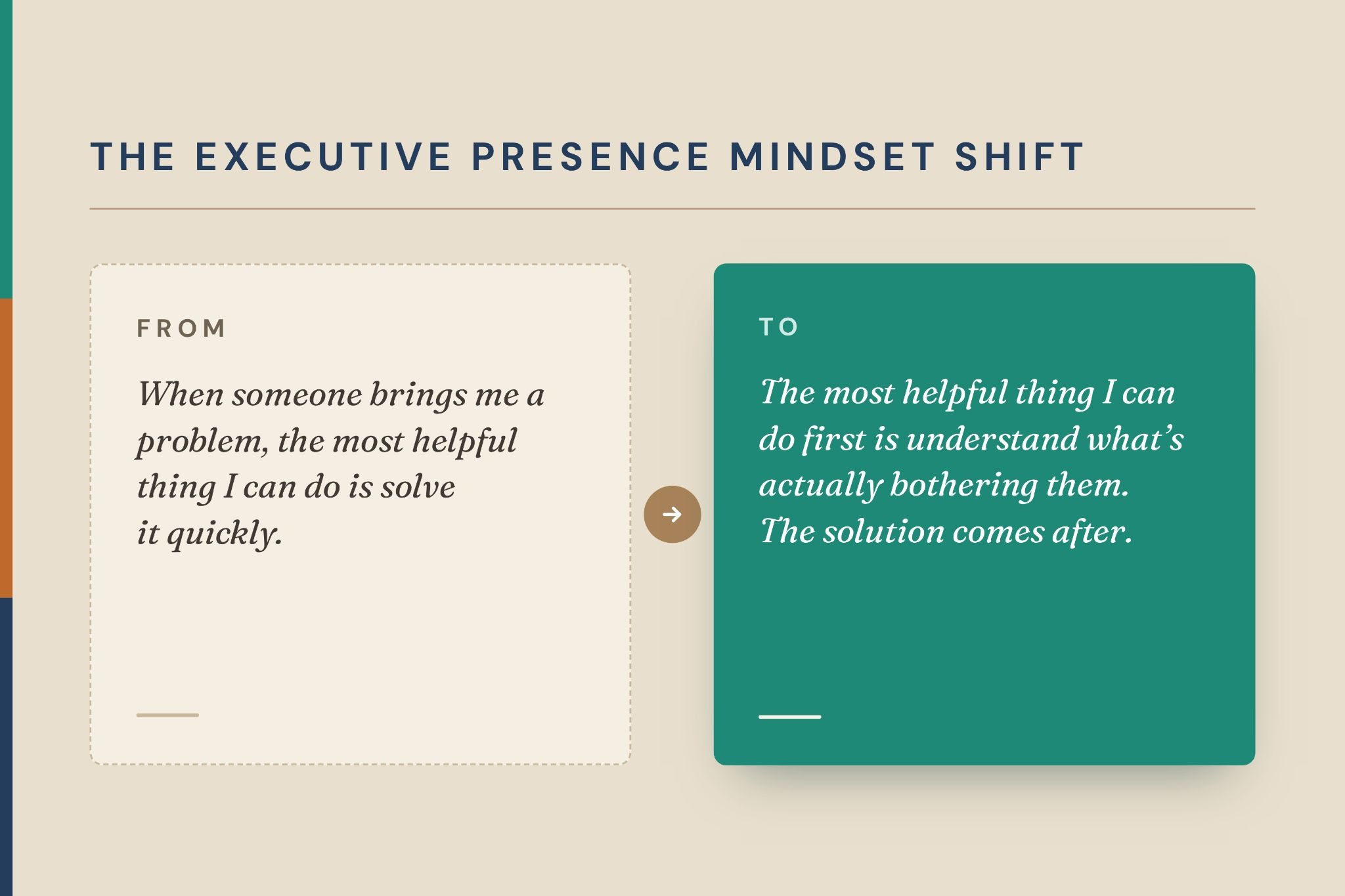
That doesn't mean advice is wrong. It means order matters. Listening to understand comes first, and the solution comes once the other person can tell you've grasped what's actually bothering them. In the opening example, the problem wasn't the account. It was that nobody had told her first. No development plan was going to fix that.
Interrupting is the most visible version of the same habit. It's usually well meant, a quick suggestion or a "same thing happened to me," but it tells the other person you've already decided what they're saying. Knowing how to make people feel heard often comes down to letting them finish the sentence they started. That said, norms differ: in some cultures and teams, overlapping talk signals engagement rather than rudeness. What matters is whether the other person ends up feeling understood.
What Understanding Sounds Like
The most useful thing in active listening skills for leaders is surprisingly simple: say back what you've heard, in your own words, before you add anything. "So it's not just losing the client. It's finding out the way you did." If you've got it right, the person usually relaxes. If you haven't, they'll correct you, and now you know.
It also helps to ask what kind of help they want. "Do you want my take, or are there any other options you're already weighing?" lets them steer, and often reveals that they've already half solved it.
A lot of what makes listening hard happens inside your own head. While the other person talks, part of you is rehearsing a reply, judging your own response, or worrying about getting it right. If that inner commentary tends to be harsh, working on how to change negative self-talk can make more room for the person in front of you.
None of this means listening forever. Some conversations do need a decision, and fast. The aim is to understand quickly before you act, not to avoid acting.
Much of executive presence coaching focuses on how leaders speak. Arguably more depends on how they take in what others say. At Coach Vikram & Company, we would say that the leaders people bring their problems to are the ones who make them feel understood before they try to help.