

You know the client’s systems better than almost anyone in the room. You know where the work slows down, which handoffs fail, and which decisions will cause trouble six months from now. Yet most of your time with the client goes on status updates: what’s done, what’s late, and what is green, amber, or red.
That gap is frustrating. Your insight is real, but it rarely reaches the conversations where the client decides what to do next. You’re invited to report, not to advise. And the longer that goes on, the more the relationship comes to rest on the statement of work (SOW) rather than on what you could help the client achieve.
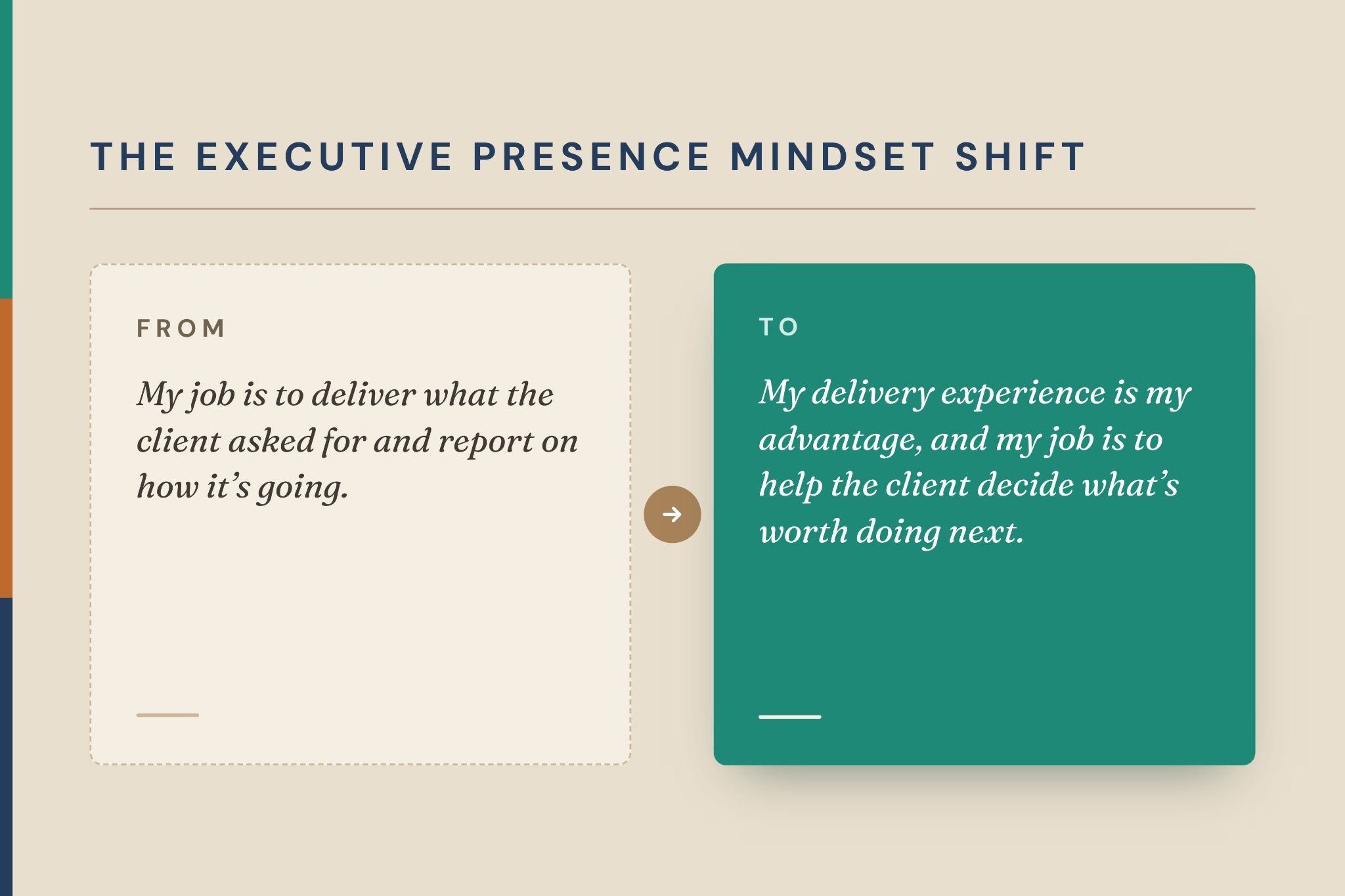
None of this means your experience counts for less. Your delivery experience is your advantage. You have seen what works, what fails, and what it takes to turn a promise into an outcome, often more closely than anyone else the client deals with. The task is to bring that experience into the conversations where it can shape decisions.
Making that move doesn’t start with sharper recommendations. It starts with curiosity. To become a trusted advisor, you first need to understand what the client is trying to achieve beyond the scope you were hired for, and the quickest way there is to ask.
Research on conversation supports this: people who ask more questions, especially follow-up questions, tend to be liked more by the people they’re talking with (Huang et al., 2017). With clients, that warmth comes with something more useful. The answers show you where your experience can matter most.
Question One: “What Does Success Look Like for You This Year?”
Your SOW tells you what the client bought. It doesn’t tell you what they’re measured on. Their leadership may care most about cost, speed to market, or a risk that keeps coming up in board reviews, and the project you’re delivering is only one part of that picture.
Ask this question, and then ask a follow-up about whatever they mention first. You’ll learn which of your updates the client actually cares about, and you’ll start describing your work in their terms rather than in effort, tickets, and milestones. That shift is often the first sign to a client that they’re dealing with a partner, not a supplier.
Question Two: “Which Decision Is This Work Feeding Into?”
Most delivery work exists to support a decision somewhere above it: whether to expand a platform, consolidate vendors, or enter a new market. When you know what that decision is, your delivery insight stops being a status report and becomes input the client can use.
This is where your experience earns its place. Once you know the decision, you can raise the question that matters, such as whether there are any other options worth weighing before the client commits, and you can raise it as someone who has seen the work up close.
Question Three: “What’s Coming Next That We Should Be Preparing For?”
Delivery teams are trained to look at the current release. Advisors look a little further ahead. This question invites the client to share what’s on the horizon, such as a reorganization, a new regulation, or a change in strategy, before it turns into an urgent request.
It also surfaces opportunities you can share. Sometimes the answer reveals a problem you’ve already solved for another client, or a risk you can help them avoid. Raised early, that is help. Raised after the request lands, it can sound like selling. This is how stronger client relationships are built: by being useful before you’re asked.
Why Curiosity Comes Before Advice
None of these questions needs a separate meeting. Each fits inside a status call, a steering committee, or the last five minutes of a review. What matters is that you ask them out of genuine interest, and that you stay with the answer rather than steering back to the plan.
At Coach Vikram & Company, we would say this is the shift that separates a technical expert from an advisor: the expert arrives with answers, while the advisor arrives curious about the client’s world. Executive presence is what turns that experience into influence. Leaders who come to executive presence coaching often expect to work on how they present to senior clients, and many find the larger change is in the questions they ask.
The same curiosity pays off inside your own team. Asking people what they want more of is often where helping employees reach their potential begins, and a team that is growing is a far stronger case for any client.
Your delivery experience is already your advantage. The right questions are how you turn it into influence with the client.