

The request rarely sounds dramatic when it arrives, because it is usually framed as a sensible compromise, such as skipping a round of regression testing to make the date, trimming documentation that nobody seems to read, or going live with a handful of known defects that can be fixed in the next release. The client is under real pressure, the deadline is real too, and you can feel how easy it would be to agree and keep everyone happy for another week.
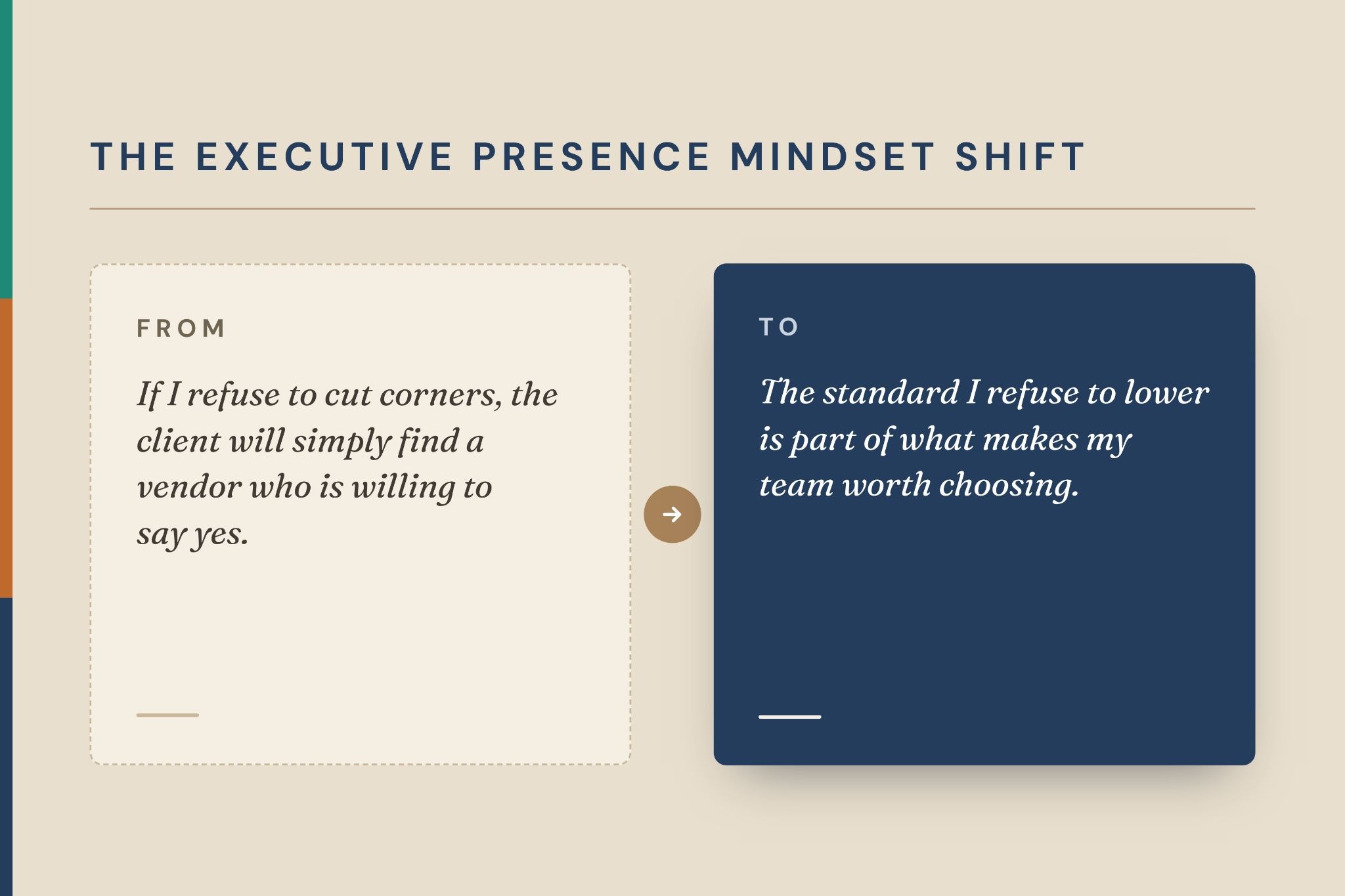
What makes the moment harder is the quiet suspicion that if you refuse, the client will simply find a vendor who is willing to say yes. Yet the moment you agree to deliver below your own standard, you become exactly that kind of vendor, interchangeable with any other team prepared to move faster by checking less, and from then on the only thing left to compete on is price.
Learning how to stand out from other vendors often comes down to moments like these, because the standard you hold when it would be easier to let it slip is one of the clearest signals a client ever gets about what makes your team different. Research on trust supports this, since one widely cited model holds that people judge whether someone is trustworthy partly on their integrity, meaning how consistently they keep to principles the other party finds acceptable, alongside their ability and their goodwill (Mayer, Davis and Schoorman, 1995).
Way One: Make the Hidden Cost of the Shortcut Visible
A shortcut almost always looks cheaper to the client than it really is, because its cost arrives later and lands somewhere they cannot see from where they sit today. Your delivery experience lets you describe that cost in their terms, whether it is defects their own customers will find first, a finding at the next audit, or a support team that spends the following quarter cleaning up after the launch.
When you put that cost on the table plainly and without drama, the conversation stops being about whether you are being rigid and becomes a decision the client can make with full information, which is where competing on value, not price really begins.
Way Two: Offer a Faster Path That Keeps the Standard
Saying no to a shortcut is far easier when you arrive with a way to protect what the client actually needs, which is usually the date rather than the shortcut itself. You might ask whether there are any other options, such as releasing a smaller first version on time and the rest a few weeks later, or adding people to the testing effort for a short period, so that the deadline holds without the quality slipping.
This is what clients are pointing to when they talk about vendor vs partner, because a vendor either refuses or complies, while a partner finds a third path that serves the outcome they care about.
Way Three: Make Your Standard Part of What You Offer
The last step is to stop treating your quality bar as a private rule and to start presenting it as part of what the client is buying from you. When you explain that the testing you refuse to skip is the reason their last three releases went live without incident, the standard stops sounding like an obstacle and starts sounding like the very thing that sets your team apart.
That shift sits at the heart of knowing how to avoid being a commodity vendor, because clients rarely replace a partner whose standards have repeatedly saved them, however much cheaper the alternative looks on paper.
Requests to cut corners rarely arrive in a meeting set aside to discuss them, and they far more often surface halfway through a crowded day, between one call and the next, when there is little attention left for the trade-off. Learning how to be more present as a leader in back-to-back meetings makes it far easier to catch that kind of request before a tired yes slips out.
At Coach Vikram & Company, we would say your delivery experience is your advantage in exactly these moments, because you know better than anyone what a shortcut will cost and what your standard has already saved. Leaders who come to executive presence coaching often find that becoming a strategic partner to clients depends less on agreeing to everything and much more on being clear about what they will not compromise.
The vendor who cuts corners is easy to replace, while the partner who protects a client from their own shortcuts is very hard to let go.