


In a planning meeting, someone from another department refers to your team's last three months of work as "the admin stuff." A couple of people smile. It isn't meant as an insult, exactly. You laugh along, the meeting moves on, and on the way back to your desk you find yourself replaying the moment and thinking of everything you could have said.
Most people know that feeling. It's the small, ordinary version of the question of how to stand up for yourself at work.
When Your Work Gets Called "Stuff"
Dismissive comments rarely arrive as open attacks. They come as throwaway lines, half-jokes, or a single word that shrinks something you care about. And because they're small, they create a particular bind. Responding feels like an overreaction, and not responding feels like agreeing.
Laughing along once is harmless. Laughing along every time teaches people how to talk about your work, and the label sticks. A few months later, "the admin stuff" is how a senior leader describes your team in a budget meeting you're not part of.
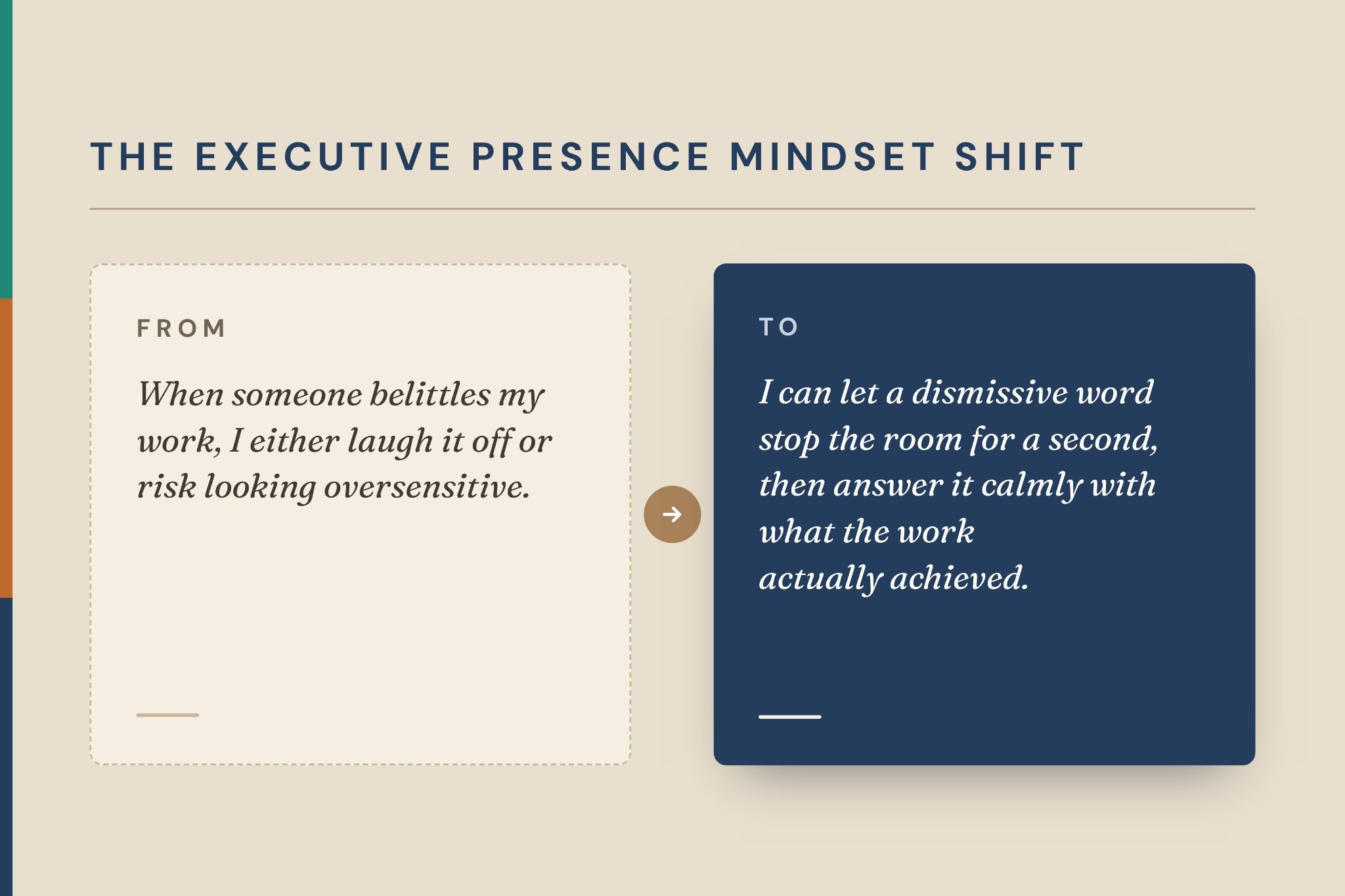
In the moment, most people see two choices: laugh it off, or bite back. It rarely occurs to them to ask whether there are any other options. There is at least one, and it starts with doing nothing at all for about two seconds.
A Pause Worth Studying
There's a scene in The Devil Wears Prada that shows this with unusual precision. During a styling meeting, Andy can't see the difference between two nearly identical belts, and says she's "still learning about this stuff." Miranda Priestly stops. She repeats the word back, "This... stuff?", and lets it hang in the air before saying anything else.
Then she explains, calmly and in detail, how the color of the sweater Andy is wearing came down through designers and department stores before it reached her, and how much work and money that one shade represents. She doesn't raise her voice. She just makes the dismissed thing impossible to dismiss.
It's worth being honest about the tone. Miranda's version is cutting, and there's real contempt in it. Nobody should copy that part. But the structure is worth noticing: a pause that signals the remark has landed, followed by substance instead of indignation.
Why a Pause Carries Weight
Silence in conversation is more noticeable than most people realize. In one study, a gap of just a few seconds in an otherwise flowing conversation was enough to make people feel uneasy and less sure of where they stood (Koudenburg et al., 2011).
That's exactly why a brief pause works after a dismissive comment. It tells the room, without a word, that something just happened that won't be brushed past. It also gives you a moment to choose your response instead of reacting. And it's worth watching how the other person responds during those seconds. Knowing how to read body language in meetings helps you tell whether they're embarrassed, defensive, or simply hadn't thought about it.
Because silence is uncomfortable, it should be used sparingly. A pause that makes a point is assertive. One that stretches on to make someone squirm is something else.
Answering the Substance
What comes after the pause matters most. Indignation ("That's not fair") invites an argument about tone. Specifics end it. "I'd push back on 'admin.' That work is the reason the audit closed in two days instead of two weeks." The sentence is calm, factual, and very hard to wave away.
It also doesn't need to be a speech. One clear fact is usually enough. If the comment was careless rather than pointed, a lighter touch works too: "Admin is underselling it a bit. Can I show you what's actually in there?" If the comment came from someone senior, or the meeting isn't the right place, the same sentence can wait for a quiet word afterward without losing its force.
Much of executive presence coaching comes back to moments like this one: small, easy to let pass, and quietly shaping how others value your work. At Coach Vikram & Company, we would say that standing firm doesn't require a raised voice, only the willingness to let a dismissive word stop the room for a second.