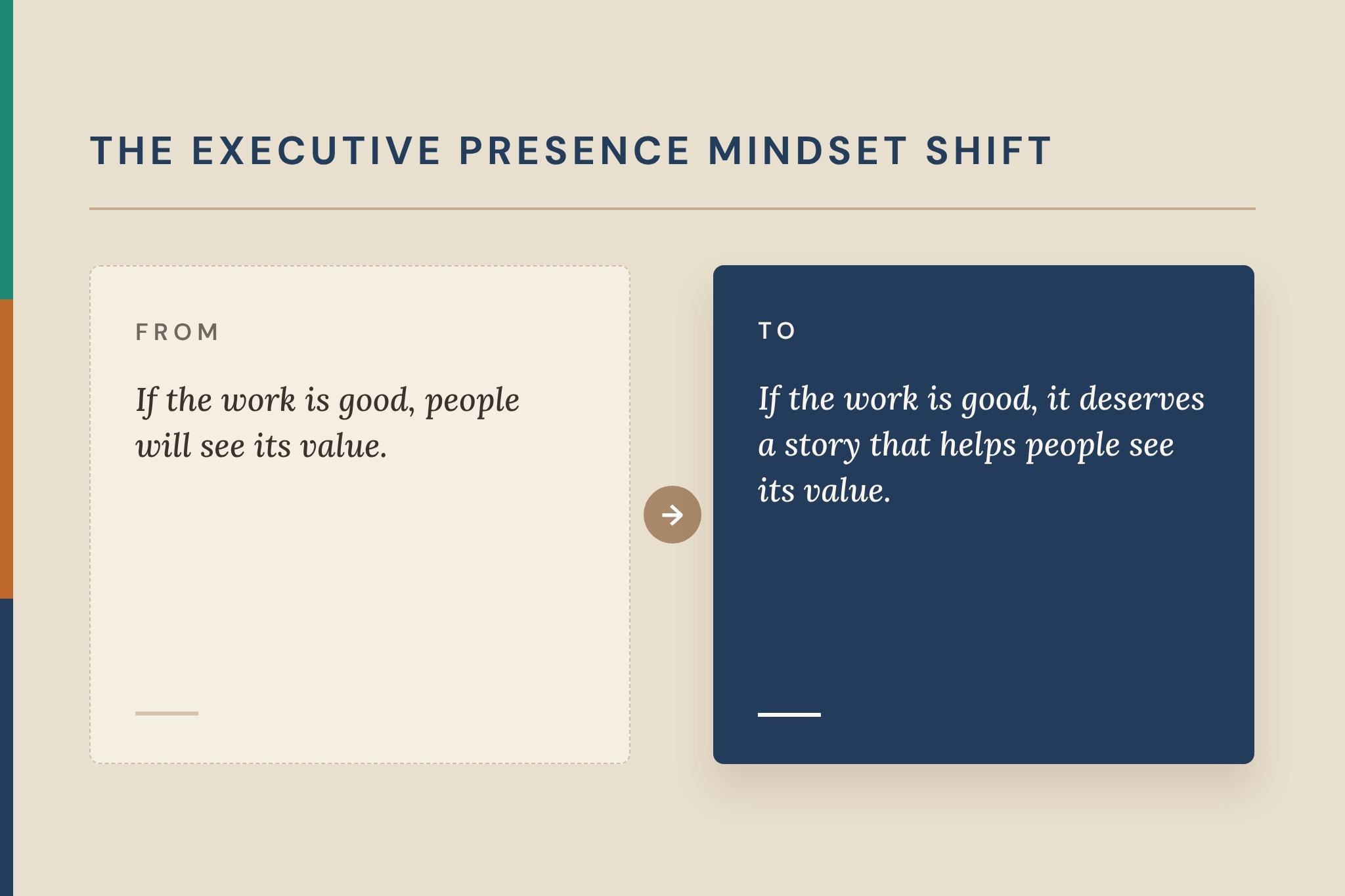

Your team has done something genuinely new. The results are solid, the method is careful, and you are proud of it. You present it to senior leaders: the background, the approach, the data, the next steps. They nod. Someone says “good work.” A month later, a less substantial project from another part of the business gets the funding and the attention, because its leader told a better story.
This is a familiar frustration for leaders whose work is technical, scientific, or deeply specialized. The substance is there. What is missing is the narrative that helps others understand why it matters and what makes it different. Without it, even excellent work tends to blend in, and the leader behind it can start to feel the organization does not value what their team does.
Stories do something data struggles to do. Research on narrative found that the more people were absorbed in a story, the more their beliefs shifted toward those the story implied (Green and Brock, 2000). Knowing how to stand out at work is not about self-promotion. It is about giving people a story worth repeating, and it can be built in three steps.
Step 1: Start With the Problem Your Audience Recognizes
Specialists tend to begin with background and method, because that is how they think about the work. Senior audiences outside your field need a different entry point: the problem, described in terms they already care about. What was costly, risky, slow, or missing? Who felt it? It helps to test your opening on someone outside your field. If their first response is “so what?”, the problem has not yet been framed in their terms.
Starting there gives the rest of the story a reason to exist. A research program becomes interesting the moment people see the business problem it addresses. A sustainability initiative matters the moment someone explains the customer or regulatory pressure it answers.
Step 2: Name What You Did Differently
The middle of the story is where your unique value at work lives. It is tempting to skip it, from modesty or because it feels obvious to you. It is rarely obvious to anyone else. Saying plainly what you did that others could not, or would not, is not bragging. It is information people need to back you. If saying it feels uncomfortable, remember that the alternative is not modesty. It is leaving others to guess, and they usually guess wrong or not at all.
Be specific. “We changed the way we test” says little. “We found a way to test in two days what used to take three weeks” says what is different and why it matters. That is the practical meaning of how to differentiate yourself at work.
Step 3: Show What Becomes Possible, Then Test Whether It Travels
End with what the work makes possible next: for the business, a customer, or a market. This is the part senior leaders carry into budget discussions and conversations you will never attend, which is often where decisions about your work are really made. It is also where the larger ambition lives. A research center becomes an innovation hub in other people’s minds when its leader keeps telling the story of what it makes possible.
Then test it. Ask a colleague outside your area to explain your work back in two sentences. Where they struggle shows you what to sharpen. When someone asks whether there are any other options, a well-built story lets you explain why this path is worth taking without retreating into detail. How you open also matters, because setting the tone in meetings shapes whether people lean in to your story or wait for it to end.
At Coach Vikram & Company, we would say that the most valuable work in an organization is often the least understood, simply because nobody has told its story well. It comes up often in executive presence coaching with scientists, engineers, and specialists whose influence is growing faster than their audience’s understanding of what they do.