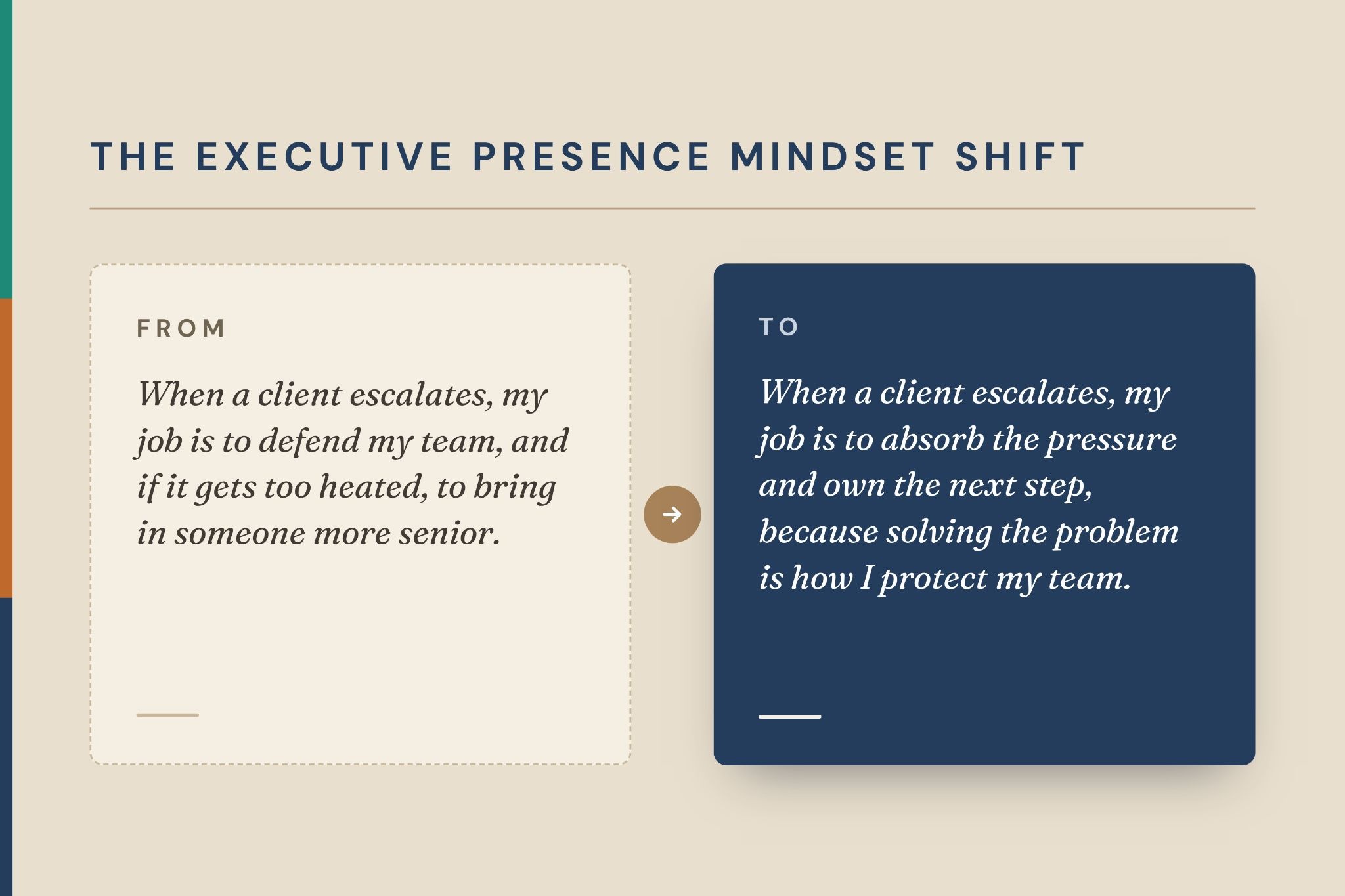


The call starts badly and gets worse within minutes, as the client begins criticizing your team in front of their own colleagues and you feel yourself sliding into a defense of every decision your people made, while a quieter voice at the back of your mind asks whether this would all be easier if you simply looped in your boss.
Both instincts are understandable, yet both make the escalation harder to resolve, because defending your team in the first few minutes turns the call into an argument about blame when what the client actually wants is to know that the problem is in good hands. Calling your boss in feels safer in the moment, yet it quietly tells the client that you are not the person who can fix this, and the next time something goes wrong, they will go straight over your head.
Learning how to handle an angry client starts with a different reading of what is happening on that call. The anger is rarely about you, and far more often it is the pressure the client is carrying from their own leadership, arriving at the first person they can hand it to.
The research on emotion regulation explains why that reading matters, since a review of studies found that simply suppressing what you feel leaves the feeling intact, makes it harder to remember what was said, and raises physiological arousal in both you and the person you are speaking with, whereas reinterpreting the situation actually reduces the emotion itself (Gross, 2002).
Step One: Treat the Anger as Information About Their Pressure
Before you respond to anything the client has said, ask yourself who they will have to answer to once this call is over, and what they will need to be able to tell that person. That single question changes how the criticism lands, because you stop hearing an attack on your team and start hearing a client who needs something to take back to their own boss.
It also gives your mind something useful to do in the next few seconds, which is what staying calm with a client really depends on, since a mind busy working out what the client needs has far less room for the urge to defend itself.
Step Two: Acknowledge the Impact Before You Explain the Cause
The first thing you say sets the temperature for everything that follows, so make it about what the problem has cost the client rather than about why it happened. Saying that you understand the outage held up their month-end close, and that you know how that looks to their finance leadership, will settle the room far faster than any explanation of what went wrong in the release.
Your team still deserves your support, but the right time to defend them is later in the conversation and with facts, once the client believes you understand what they are dealing with, because on an escalation call with a client, explanations that arrive too early sound like excuses, while the same explanations arriving later sound like the beginning of a fix.
Step Three: Leave the Call Owning the Next Step
The surest way to keep your boss out of the escalation is to make it obvious that you have it in hand, so close the call with a clear commitment about what will happen next and when the client will hear from you again. If a full fix is going to take time, ask whether there are any other options for getting the client what they need in the meantime, because a client who has something to show their leadership tomorrow no longer needs to escalate further.
The same three steps apply when the anger arrives in writing, so when you are responding to an angry client email, it helps to wait long enough to answer the pressure rather than the tone, and then to acknowledge the impact, name the next step, and commit to a time.
Once the call is over, your team will be waiting to hear how it went, and the steadiness you showed the client is worth turning toward them as well. The engineer who quietly fixed the issue while you did the talking deserves to have that strength recognized, even though they were never the star in the room.
At Coach Vikram & Company, we would say that your delivery experience is your greatest advantage in these moments, because nobody on the call understands the problem, the system, and the team better than you do. Leaders who come to executive presence coaching often find that how to handle client escalations is less about finding the perfect words and much more about staying composed long enough for that experience to show.